

Event Design and Build Singapore: Concept to Build
28 February 2026
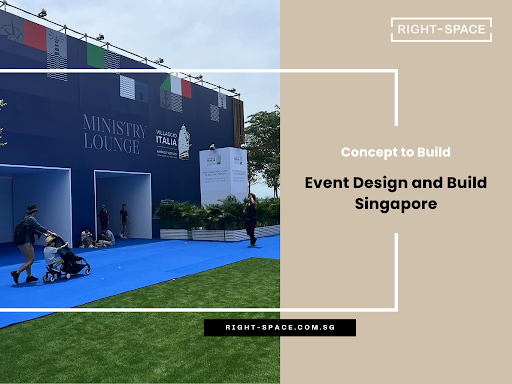
Công việc thiết kế và thi công sự kiện tại Singapore không chỉ bắt đầu khi ý tưởng được phê duyệt. Nó bắt đầu khi ý tưởng đó trở nên khả thi về mặt đo lường, xây dựng và lắp đặt trong một địa điểm thực tế với các quy định cụ thể. Bài viết này sẽ hướng dẫn bạn cách các thương hiệu chuyển đổi hình ảnh đã được phê duyệt thành một môi trường sự kiện có thể được chế tạo, vận chuyển, lắp đặt và vận hành an toàn tại Singapore.
Nếu bạn muốn xác định bối cảnh dịch vụ trước tiên, phạm vi của Right-Space dành cho Sự kiện và Tiếp thị là cơ sở gần nhất để hiểu “từ đầu đến cuối”.
Vì sao “khái niệm được phê duyệt” không giống với “khả thi xây dựng”
Ý tưởng được phê duyệt thường là một quyết định sáng tạo: hình thức, không khí, ngôn ngữ thương hiệu và loại tương tác mà bạn muốn người tham dự có được.
Môi trường xây dựng là một quyết định về kỹ thuật và vận hành: kích thước, trọng lượng, độ ổn định, vật liệu, lớp hoàn thiện bề mặt, kế hoạch điện năng, đường đi của cáp, các hạn chế về vận chuyển và trình tự lắp đặt.
Khi hai trạng thái đó bị nhầm lẫn, các thương hiệu sẽ phải chịu những tổn thất khó tránh khỏi:
- Quá trình bịa đặt bắt đầu từ những giả định.
- Các nhóm thi công tại công trường dành hàng giờ để khắc phục các vấn đề về lắp ráp.
- Sản phẩm cuối cùng trông “tạm được” nhưng không đạt chất lượng cao cấp.
- Ngày diễn ra buổi biểu diễn biến thành một cuộc đấu súng.
Một công ty tổ chức sự kiện uy tín mà các thương hiệu Singapore tin tưởng coi khả năng xây dựng là một nguyên tắc, chứ không phải là giai đoạn cuối cùng.
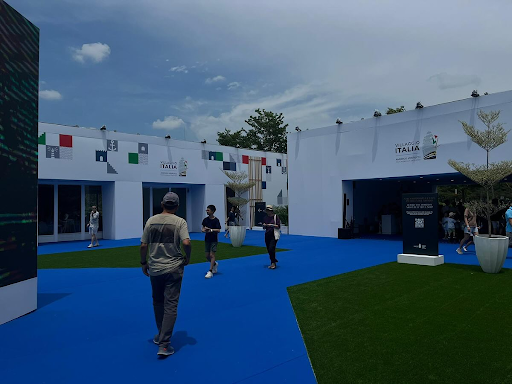
Quá trình chuyển đổi từ ý tưởng đến sản phẩm thực tế mà các thương hiệu nên mong đợi
Quá trình dịch này không diễn ra một chiều. Đó là một quá trình chuyển đổi nhiều giai đoạn, từ ý định đến chỉ dẫn.
Giai đoạn 1: Xác định rõ mục đích của từng khu vực trước khi thiết kế chi tiết.
Việc xây dựng sẽ dễ dàng hơn khi mỗi khu vực đều có một chức năng riêng.
A practical environment brief maps zones to outcomes:
- The entry zone creates attention and sets the brand tone
- engagement zone delivers the primary action, such as demo, sampling, scan, or consultation
- conversion zone supports lead capture, purchase, booking, or redemption
- The content zone enables planned photography angles and lighting consistency
- back-of-house zone stores stock and hides operational resets
When purpose is unclear, you get beautiful structures that do not perform. The build then gets blamed for a strategy gap.
Stage 2: Turn visuals into dimensions that can be signed off
Dimensions remove ambiguity.
This is where many brands underestimate the importance of technical drawings. A render can be “approved,” but a builder needs:
- plan view dimensions for footprint
- elevations for height, signage placement, and clearances
- sections for internal framing and weight distribution
- details for joinery, mounting methods, and tolerances
If a supplier is asked to build from “reference visuals,” quality becomes inconsistent. The more vendors involved, the worse it gets.
Stage 3: Build feasibility planning before production starts
Feasibility planning is where you decide what can be built within:
- timeline and lead times
- venue access, loading, and working hours
- safety and compliance constraints
- budget that aligns with materials and finishing level
This planning should surface trade-offs early. A glossy, curved, high-finish feature wall is not “just design.” It is cost, lead time, transport risk, and installation complexity.
Stage 4: Production readiness is a checklist, not a feeling
Before fabrication starts, production readiness should be explicit:
- bill of materials confirmed, including finish system and substrate
- print specs locked, including lamination type and mounting method
- power draw estimated and distribution planned
- structural assumptions validated, especially for overhead elements
- installation sequence defined and time-boxed
- testing plan set for AV and interactive components
This is where experienced teams protect show day. They do not “move fast” by skipping readiness. They move fast by reducing rework.
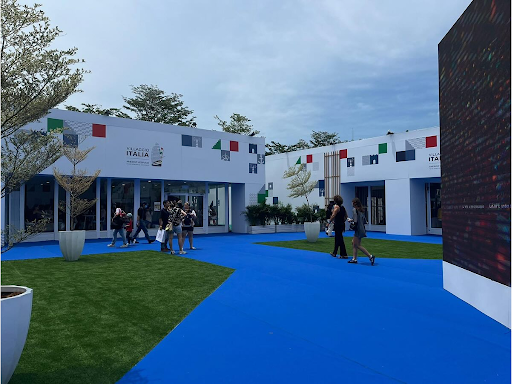
What makes Singapore event builds operationally different
Singapore has reliable infrastructure and professional venues, but it is also tightly governed in ways that affect event builds.
Compliance can affect what you are allowed to build
If your event involves temporary structures or enclosed build elements, approvals may apply depending on the setting and use case.
SCDF’s Temporary Change of Use process is a real constraint for certain temporary events, including exhibitions and promotional activities, and it is tied to fire safety conditions and layout plans. Refer to the official guidance on SCDF Temporary Change of Use permit requirements.
This matters for design because compliance conditions can drive:
- maximum booth or structure heights in certain contexts
- requirements around access, egress, and layout confinement
- restrictions on enclosure and tent use in some indoor settings
Temporary structures may require engineering oversight
Brands often assume event builds are “temporary, so it is simpler.” In Singapore, certain temporary buildings and structures can fall under BCA requirements for a permit to use, and BCA’s guidance highlights that owners may need to engage a Professional Engineer for design and inspection depending on the structure. See BCA temporary building application guidance.
You do not need to turn your activation into a construction project. You do need to know when the structure type triggers a different level of responsibility.
Work-at-height realities show up in installation and rigging
Many show-site tasks are work-at-height tasks: truss, lighting, overhead signage, ladder work, and elevated installation.
WSH guidance defines what “work at height” is and why it is treated as a safety priority. A quick baseline reference is the WSH Council resource on work at heights.
For event build planning, this affects:
- How long installation will realistically take
- What equipment and manpower are needed
- How much can be safely done during limited venue windows
The build components that usually cause delays or quality problems
Brands often focus on the “main feature wall.” In practice, failures come from interfaces.
Interfaces that commonly break down
Print-to-structure interface
If prints are designed without considering seams, overlaps, and mounting method, the final surface shows bubbles, misalignment, or visible joints.
Lighting-to-finish interface
A finish that looks premium in a workshop can look cheap under venue lighting. Matte, gloss, metallic, and reflective surfaces behave differently under hard light.
AV-to-content interface
Screens do not fail because the LED is broken. They fail because the content format is wrong, the pixel mapping is off, or the playback device is not tested under show conditions.
Cable-to-guest flow interface
Cables routed late become trip risks, create messy visuals, and force last-minute taping that looks unprofessional.
A good event production company Singapore brands hire spends time on these interfaces because they determine whether the environment feels “built” or “assembled.”
How design coordination works between teams
Event environments are rarely built by one person. They are built by a coordination system.
The roles that matter during concept-to-build
Producer or project owner
Owns the outcome, trade-offs, and approvals. This person protects the objective when stakeholders pull in different directions.
Technical lead
Owns feasibility, power planning, structural assumptions, and show-site constraints.
Fabrication lead
Owns build method, tolerances, finishes, and pre-assembly planning.
Site manager
Owns installation sequencing, safety briefings, and on-ground decisions.
When brands ask “who is the point of contact,” they are usually asking the wrong question. The right question is who owns decisions when there is no time.
The checkpoints that prevent last-minute chaos
A buildable environment is created by checkpoints that remove ambiguity early.
Checkpoint 1: Design freeze that is real
A design freeze is not “no more changes.” It is “changes require trade-offs.”
A mature partner will state clearly:
- What can change without impact
- What triggers rework and cost
- What must be traded off to protect timeline
This protects brands from accidental schedule compression.
Checkpoint 2: Technical freeze and sign-off package
A technical package should be sign-off ready:
- dimensioned drawings
- materials and finishes schedule
- print specs and file requirements
- power and AV plan
- installation sequence plan
Without this package, vendors are guessing.
Checkpoint 3: Pre-assembly and fit testing
Pre-assembly is the difference between smooth installation and on-site rework.
Fit testing catches:
- tolerance issues
- misaligned joints
- missing fasteners or wrong hardware
- finish damage risk during handling
Brands often skip this to save cost. They pay for it later in overtime and rushed finishing.
Checkpoint 4: Show-site readiness walk
A show-site readiness walk is practical, not ceremonial:
- Check floor protection
- Confirm power distribution points
- validate footprint boundaries and clearance
- Confirm access routes from loading bay to site
- stage stock and back-of-house
This is where a build transitions into an operating environment.
What “buildable” looks like in real brand scenarios
Scenario: Atrium activation in a mall
The design includes a photo wall, product try-on, and redemption counter.
Buildability questions that decide success:
- Can queues be held without blocking tenant frontage
- Can the redemption process be completed fast enough
- Where is back-of-house stock stored without showing clutter
- Where do cables run so the floor stays clean and safe
If these answers are not in the build plan, the environment looks good but performs poorly.
Scenario: Corporate experience zone inside an office lobby
The lobby has strict rules and limited after-hours work.
Buildability questions:
- Can installation be done quietly and quickly
- Can the build be modular and moved in smaller parts
- Does the structure protect the floor and existing finishes
- Are the touchpoints durable for a high-volume audience
This is where build method beats the design ambition.
Scenario: Exhibition-style environment with product education
When education matters, the display design must support reading distance, dwell time, and flow.
If your environment includes display boards, the design is not “graphics.” It is a conversion surface.
Right-Space’s guide on Exhibition Display Board Design is relevant because it frames how visual merchandising and display surfaces support engagement and lead outcomes, not just aesthetics.
How to select an event design and build partner in Singapore
Các thương hiệu thường lựa chọn dựa trên hình ảnh trong portfolio. Điều đó là chưa đầy đủ.
Hãy yêu cầu cung cấp các bằng chứng chứng minh tính hiệu quả của quá trình thực thi.
Yêu cầu ví dụ về:
- bản vẽ kỹ thuật từ các công trình đã xây dựng trước đây
- bảng kê vật liệu và thông số kỹ thuật hoàn thiện
- kế hoạch trình tự lắp đặt
- danh sách lỗi và danh sách kiểm tra bàn giao
Những hiện vật này cho thấy liệu đối tác có hệ thống nào không.
Hãy hỏi họ bảo vệ khả năng sẵn sàng sản xuất như thế nào.
Một câu trả lời thuyết phục bao gồm:
- Các điểm khóa cho việc in ấn, gia công, nội dung và cài đặt
- Điều gì xảy ra khi việc phê duyệt bị chậm trễ?
- Cách định giá các thay đổi và quản lý các sự đánh đổi.
Nếu câu trả lời là “chúng tôi sẽ cố gắng hết sức”, thì bạn đang chấp nhận rủi ro.
Hãy hỏi họ xử lý các phụ thuộc vào nhà cung cấp như thế nào.
Nếu liên quan đến sản xuất, thiết bị nghe nhìn, in ấn, nhân lực và hậu cần, bạn cần một chủ sở hữu duy nhất để tích hợp tất cả các khâu.
Nếu không có một người chủ sở hữu duy nhất, thương hiệu sẽ trở thành người điều phối. Đó là lý do tại sao ngân sách bị vượt quá và ngày diễn ra sự kiện trở nên căng thẳng.
Phần kết luận
Sự khác biệt giữa một ý tưởng trông đẹp mắt và một môi trường hoạt động hiệu quả nằm ở khâu chuyển giao: sự rõ ràng về mặt kỹ thuật, sự sẵn sàng sản xuất và kỷ luật lắp đặt. Các thương hiệu coi việc xây dựng khả thi là công việc ngay từ đầu sẽ có những tuần trình diễn suôn sẻ hơn và kết quả tốt hơn.
Nếu bạn muốn có một kế hoạch xây dựng mà bạn có thể tự tin phê duyệt, hãy cung cấp cho Right-Space thông tin về địa điểm, thời gian và kết quả mà mỗi khu vực phải đạt được để nhóm của họ có thể chuyển ý tưởng của bạn thành một môi trường có thể đo lường được, có thể xây dựng được và sẵn sàng cho buổi trình diễn.
Câu hỏi thường gặp về thiết kế và xây dựng sự kiện tại Singapore
“Thiết kế và tổ chức sự kiện” ở Singapore có nghĩa là gì?
Điều đó có nghĩa là thiết kế môi trường sự kiện và quản lý việc thi công: bản vẽ kỹ thuật, lựa chọn vật liệu, chế tạo, hậu cần, lắp đặt và chuẩn bị địa điểm tổ chức. Một công ty sản xuất sự kiện chuyên nghiệp tại Singapore sẽ đảm nhiệm toàn bộ quá trình chuyển đổi từ ý tưởng ban đầu thành hướng dẫn thi công cụ thể.
Bản vẽ kỹ thuật cần được hoàn thành khi nào?
Trước khi bắt đầu chế tạo, bản vẽ kỹ thuật giúp loại bỏ sự diễn giải và cho phép các nhà cung cấp sản xuất một cách nhất quán. Chúng cũng hỗ trợ các cuộc thảo luận tại địa điểm về diện tích, khoảng cách và kế hoạch lắp đặt.
Tại sao bản dựng sự kiện lại trông khác so với bản dựng đã được phê duyệt?
Các bản dựng hình thường bỏ qua các đường nối, phương pháp lắp ráp, đặc tính ánh sáng trên bề mặt hoàn thiện và dung sai thực tế. Môi trường xây dựng thực tế sẽ tính đến những ràng buộc đó trong bảng kê vật liệu, kế hoạch in ấn và thử nghiệm trước khi lắp ráp.
Các công trình tổ chức sự kiện ở Singapore có cần giấy phép hoặc kiểm tra tuân thủ quy định không?
Một số trường hợp thì có, tùy thuộc vào cấu hình và mục đích sử dụng. Các sự kiện tạm thời có thể yêu cầu sự chấp thuận của SCDF theo Quy định Thay đổi Mục đích Sử dụng Tạm thời, và một số cấu trúc tạm thời có thể thuộc phạm vi yêu cầu của BCA. Luôn luôn thống nhất sớm để tránh phải thiết kế lại trong quá trình chế tạo.
Làm thế nào để đánh giá một công ty tổ chức sự kiện tại Singapore ngoài những hình ảnh trong portfolio?
Hãy yêu cầu xem các bản vẽ kỹ thuật mẫu, kế hoạch trình tự lắp đặt, thông số kỹ thuật vật liệu và danh sách kiểm tra sự sẵn sàng. Những tài liệu đó sẽ cho thấy liệu nhóm có thể xây dựng những gì họ thiết kế, đúng thời hạn và trong điều kiện hạn chế của địa điểm hay không.
Related Insights
Browse our latest articles on event management, exhibition design, and brand activation in Singapore.
View All Insights