

Product Launch Event Services Singapore: Full Scope
27 August 2026
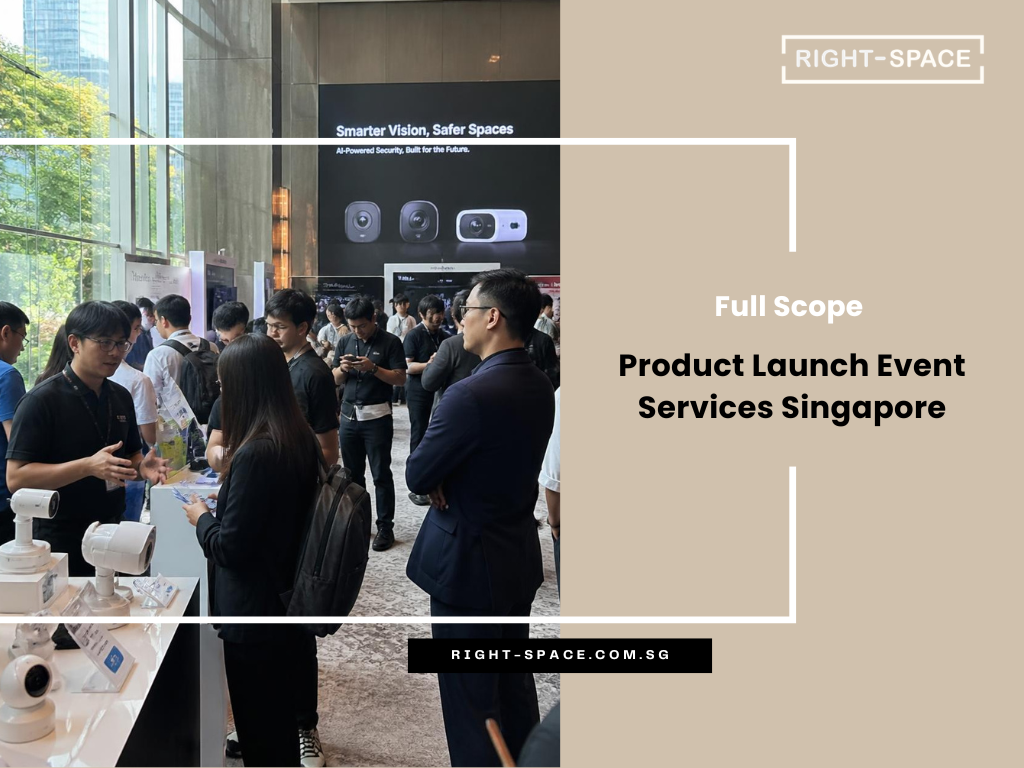
Product launch event services in Singapore range from a single rented stage to a full-scope build, and knowing the difference is what stops a launch budget from buying half a show. Singapore’s business events sector contributes over SGD 3.7 billion to the economy, and brands increasingly buy the whole scope from one partner. This blog walks you through what a full-scope build includes, phase by phase. Start with our event marketing and production scope.
What do full-scope product launch event services actually include?
Full-scope product launch event services cover the entire lifecycle of a launch, from concept and design through fabrication, staging, AV, logistics, on-site install, dismantle, and post-event measurement. It is one accountable scope that takes a brand from an idea to a delivered show and a closed-out project. Partial services stop at design or hand over drawings; full-scope carries the launch to completion.
Scope is where launch budgets are won or lost, not in the creative. Two quotes for the same launch can differ wildly because one includes fabrication, install, and load-out while the other stops at a rendered concept and leaves the brand to source the build. Understanding the phases lets a brand compare quotes honestly and see what a number actually buys. Right-Space delivers launches end-to-end as a single design-and-build scope, working from concept through measurement. Read a launch quote by its scope, not its headline price, because the cheapest number is usually the one missing the most phases.
What happens in the concept and creative phase?
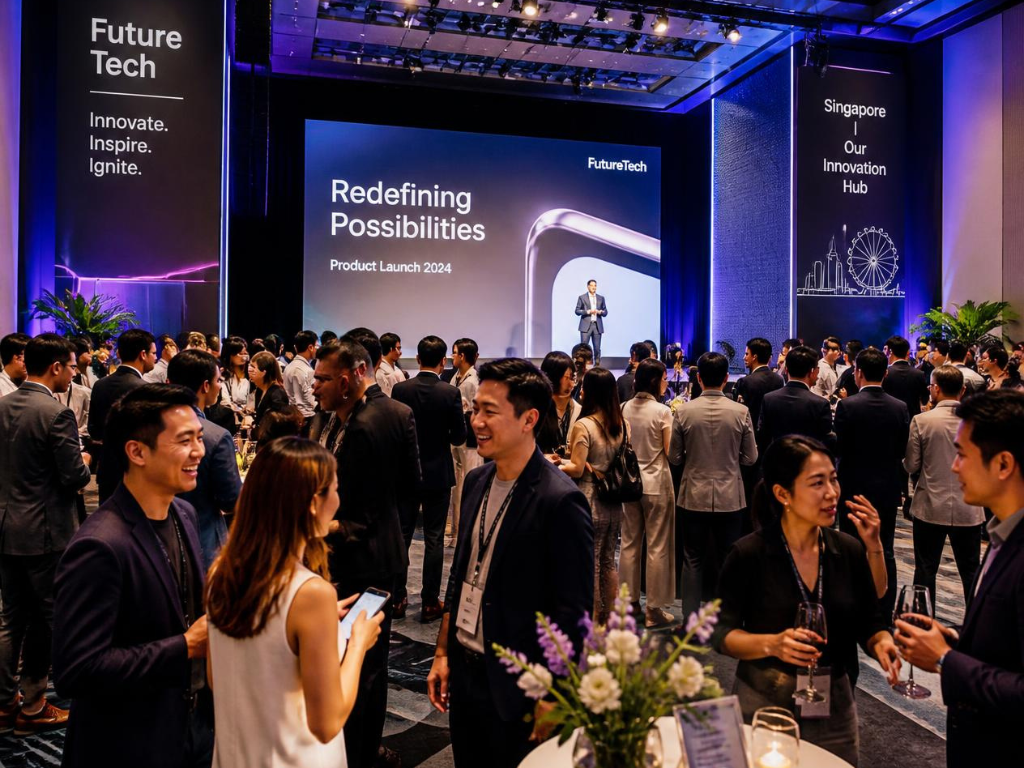
The concept phase translates the launch objective into a creative idea and an environment design, setting the theme, the reveal, the guest experience, and the look before anything is built. It starts with the brand’s goal, who the launch is for and what it must achieve, and turns that into a spatial and experiential concept. This is the foundation the whole build rests on, so a weak concept produces an expensive but hollow launch.
The phase produces tangible design outputs, not just ideas. Mood direction, spatial layouts, and the reveal mechanism are defined here, ideally as concept-to-build as one workflow so the creative is buildable from the start. A concept designed without build knowledge often has to be value-engineered later, losing impact. Lock the concept against the objective and the budget early, because every later phase inherits the decisions made here, and a concept changed after fabrication starts is the most expensive change in the project.
How does 3D visualisation de-risk a launch before build?
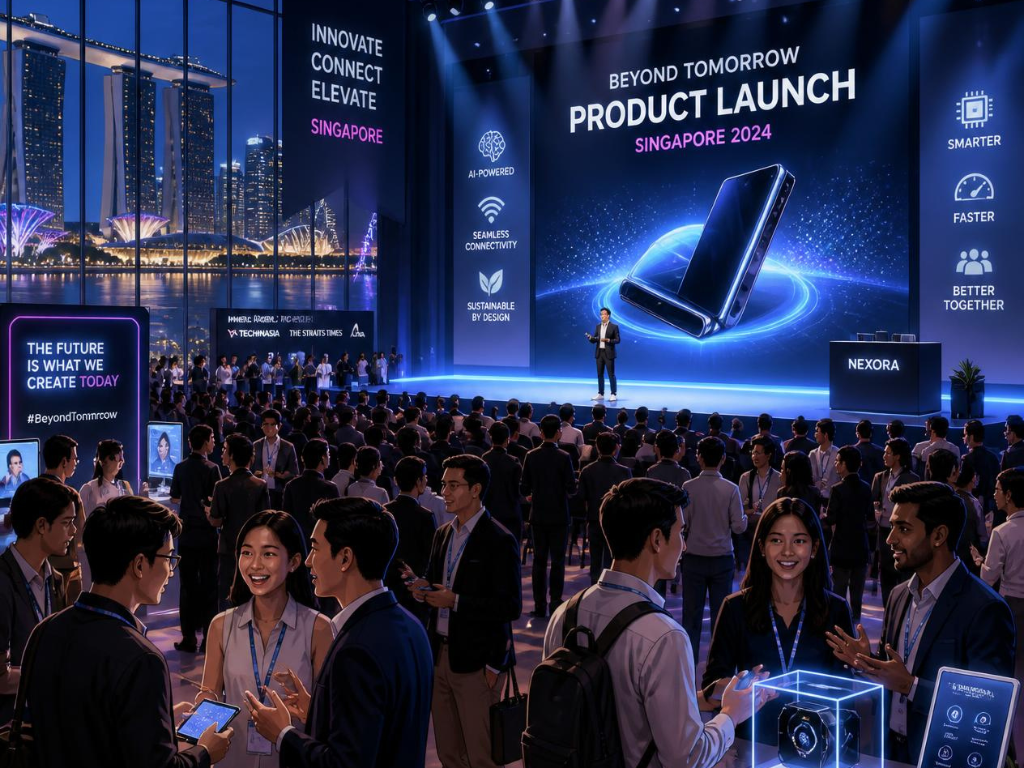
3D visualisation shows the launch environment in realistic detail before a single panel is fabricated, so the brand approves what it will actually get rather than imagining it. Right-Space treats 3D visualisation as a vital part of the design process, because seeing the space in three dimensions catches problems, sightline issues, scale mismatches, a reveal that does not read, while they are still cheap to fix. It converts a concept from a promise into a previewable plan.
The value is risk removed before money is committed. A render exposes whether the stage dominates the room, whether the branding is visible from the back, and whether the guest journey flows, before fabrication locks those decisions into physical material. 3D visualisation is the cheapest place to catch an expensive mistake, since a change on screen costs hours while the same change in a built set costs days and materials. Approve the launch in 3D before fabrication, because a visualised design is a decision made with eyes open, and an unvisualised one is a gamble on the night.
What does fabrication cover in a launch build?
Fabrication is the physical construction of the launch environment: the stage, feature walls, branded structures, the reveal mechanism, and the props, built to the approved design. It turns drawings into real, finished objects that have to stand safely and look premium under event lighting. This is where the concept becomes a physical thing an audience will stand in.
Fabrication quality decides how the launch reads on the night. Building in-house, with carpenters, scenic painters, and electricians under one roof, keeps finish and timeline under control, the discipline behind what makes a build buildable. Right-Space runs a 25,000 square foot workshop staffed by over 50 people, so a launch is fabricated by one accountable team rather than subcontracted out. Confirm who fabricates the build and where, because a launch environment finished in a rush or by a stranger to the design is where premium concepts turn ordinary.
What is included in staging and AV?
Staging and AV cover the technical show layer: the stage structure, rigging, sound, lighting, video, and the control systems that run the reveal. Staging is the physical performance platform and any suspended or ground-support structure; AV is the sound reinforcement, lighting design, LED or projection, and the cueing that fires the launch moment. Together they are what makes a reveal land as an event rather than an announcement.
This layer is where technical reliability matters most, since a failed cue or dead microphone at the reveal is unrecoverable. Full-scope the live production layer includes designing, supplying, rigging, and operating these systems, not just renting them. Rehearsal against the built stage is part of the scope, because the reveal has to be run before the night. Include staging and AV operation in scope, not just supply, because equipment delivered without a team to design and run it is a launch waiting to fail at the one moment that counts.
How do logistics and on-site install work?
Logistics and install cover moving the fabricated build to the venue and erecting it safely within the access window. This phase handles transport, loading dock and lift scheduling, the install sequence, and the crew who assemble the launch on site, often overnight or in a tight window around venue availability. It is the bridge between the workshop and the show, and it is where a build either goes up cleanly or gets solved on the floor.
The phase runs on sequence and safety. Pre-assembled, sectioned components install in order, and work at height for staging and rigging falls under MOM’s Work at Height regulations, which the crew must meet. Keeping install on schedule is exactly how install stays under control when a fixed launch time will not move. Confirm logistics and install are inside the scope, because a beautifully fabricated build with no plan to transport and erect it is a set stranded in a workshop the night of the launch.
What does dismantle and load-out include, and why does it matter?
Dismantle and load-out cover striking the build after the launch, clearing the venue, and handling storage or disposal, and they are a real part of scope that partial services quietly omit. After the event, the build has to come down safely and on schedule, the venue returned to its original state, and reusable elements stored or the rest disposed of responsibly. A launch is not finished when the guests leave; it is finished when the venue is empty and clean.
This phase catches brands out because it is easy to forget when comparing quotes. Venues charge for overruns, so a dismantle that misses its window costs money, and a quote that excludes load-out leaves the brand scrambling for a crew at midnight. Reusable structures also need storage planned in, or their reuse value is lost. Confirm dismantle and load-out are in the scope, because it is part of the build, not an afterthought, and a launch service that ends at the reveal has left the hardest logistics for the client to discover alone.
How is a product launch measured after the night?
Measurement closes the commercial scope, reporting what the launch achieved through reach, media coverage, engagement, and lead or sales impact against the original objective. A full-scope service captures the outcome, not just delivers the event: attendance, earned media, social reach and engagement, and any tracked commercial result. Without measurement, a launch is an expense with no proof of return.
The metrics have to tie back to why the launch happened. A launch built to generate press is measured on coverage and reach; one built to drive orders is measured on leads and sales, which is the strategic layer behind full event marketing and production scope. A launch you cannot measure is a launch you cannot repeat, since without data the next one starts from guesswork. Build measurement into the scope from the objective stage, because a launch reported only as a good night proves nothing, while one reported against its goal earns the budget for the next.
What is usually excluded or costs extra in launch services?
Common exclusions are venue hire, catering and F&B, talent and entertainment fees, permits and licensing, and sometimes dismantle or overtime, so a quote should be read for what it leaves out. A design-and-build scope covers the environment, staging, AV, and install, but venue, food, and headline talent are frequently separate line items or the client’s responsibility. Assuming they are included is how a launch budget blows out late.
The honest partners state exclusions up front rather than surfacing them as change orders. Permits and safety approvals, overtime for extended install windows, and content production like video can all sit outside a base scope. The scope boundary is a contract detail, not a technicality, and reading it is where a brand protects its budget. Ask explicitly what is excluded and what triggers extra cost, because the gap between a launch quote and the final invoice is almost always the phases and items the scope quietly left out.
How do the phases connect into one accountable scope?
The phases connect when a single partner owns the whole scope, from concept through measurement, so no gap opens between design, build, and delivery. Full-scope services mean one team is answerable for how the launch is designed, fabricated, installed, run, struck, and reported, rather than a chain of vendors each owning a slice. That single line of accountability is what a fixed launch date actually needs.
The alternative, splitting scope across separate suppliers, works only with heavy client-side management, because every handoff is a place for a decision to fall through. Choosing who holds that scope is its own decision, and the criteria for selecting a launch partner deserve their own evaluation. You can find more planning detail in more event and build guides from Right-Space. Keep the scope under one accountable partner where possible, because a launch delivered as one owned scope is a launch where someone is answerable when the date arrives, and that is worth more than any single line item.
Conclusion
Full-scope product launch event services run from concept and 3D visualisation through fabrication, staging, AV, logistics, install, dismantle, and measurement. The scope, not the headline price, is what a brand is really buying, and the cheapest quote is usually the one missing the most phases. Read a launch proposal by what it includes, confirm the exclusions, and keep the whole scope under one accountable partner. Do that and the budget buys a finished launch, not a half-built one.
Planning a product launch in Singapore? Ask Right-Space to scope the full build, from concept and 3D visualisation through fabrication, install, and measurement, so you can see exactly what your budget delivers before you commit.
FAQs About Product Launch Event Services Singapore
How much do product launch event services cost in Singapore?
Cost depends on which phases are in scope and the scale of the build, so a design-only service sits far below a full concept-to-measurement build. Right-Space scopes a launch after the objective, venue, and build level are confirmed, because the number of phases included, not guest count alone, drives the figure. Read every quote by its scope.
What is included in a full-service event package?
A full-service launch package includes concept, 3D visualisation, fabrication, staging, AV, logistics, on-site install, dismantle, and measurement. Venue hire, catering, and headline talent are often separate. Right-Space delivers the design-and-build scope end-to-end, so the environment, production, and install run under one accountable team rather than across multiple vendors.
Does a launch service include dismantling and removal?
It should, but not all do, so confirm it explicitly. Dismantle and load-out, striking the build and clearing the venue on schedule, are part of a full-scope service. A quote that ends at the event leaves the client to arrange a crew at midnight. Right-Space includes dismantle and storage of reusable elements in a full-scope build.
How long does a full-scope launch build take?
Right-Space recommends engaging at least two to three months ahead, with larger custom builds needing more. That window covers concept, 3D visualisation, approvals, fabrication, install, and rehearsal. A launch commissioned weeks out is limited to what can be assembled fast, since the go-live date fixes an immovable deadline across every phase of the scope.
Related Insights
Browse our latest articles on event management, exhibition design, and brand activation in Singapore.
View All Insights