

Product Launch Event Cost Singapore: 2026 Ranges
28 August 2026
A product launch event cost in Singapore ranges from tens of thousands to several hundred thousand SGD, and the number is set by scope, not by a fixed price list. Singapore’s business events sector contributes over SGD 3.7 billion to the economy, and launch budgets sit across a wide band within it. This blog walks you through what a launch actually costs, tier by tier and line by line. Start with our event marketing and production scope.
What does a product launch event cost in Singapore?
A product launch event in Singapore typically costs between SGD 20,000 and SGD 300,000 or more, depending on scale, venue, production, and talent. Based on 2026 Singapore market benchmarks, a mid-scale launch for 100 to 150 guests commonly runs SGD 50,000 to SGD 120,000, while premium flagship launches at landmark venues with full LED production reach SGD 300,000 and beyond. Smaller, focused launches start lower, around SGD 20,000 to SGD 50,000.
The wide band is not vagueness; it reflects genuinely different events under one label. A media preview for fifty guests and a public flagship launch with a built environment and a celebrity are both product launches, and they sit at opposite ends of the range. The cost follows the scope, so the useful question is not what a launch costs in general, but what your specific launch scope costs. Set the budget from the scope you need, not from a headline figure, because the same words describe events that differ by a factor of ten in price.
What are the cost tiers, from intimate to flagship?
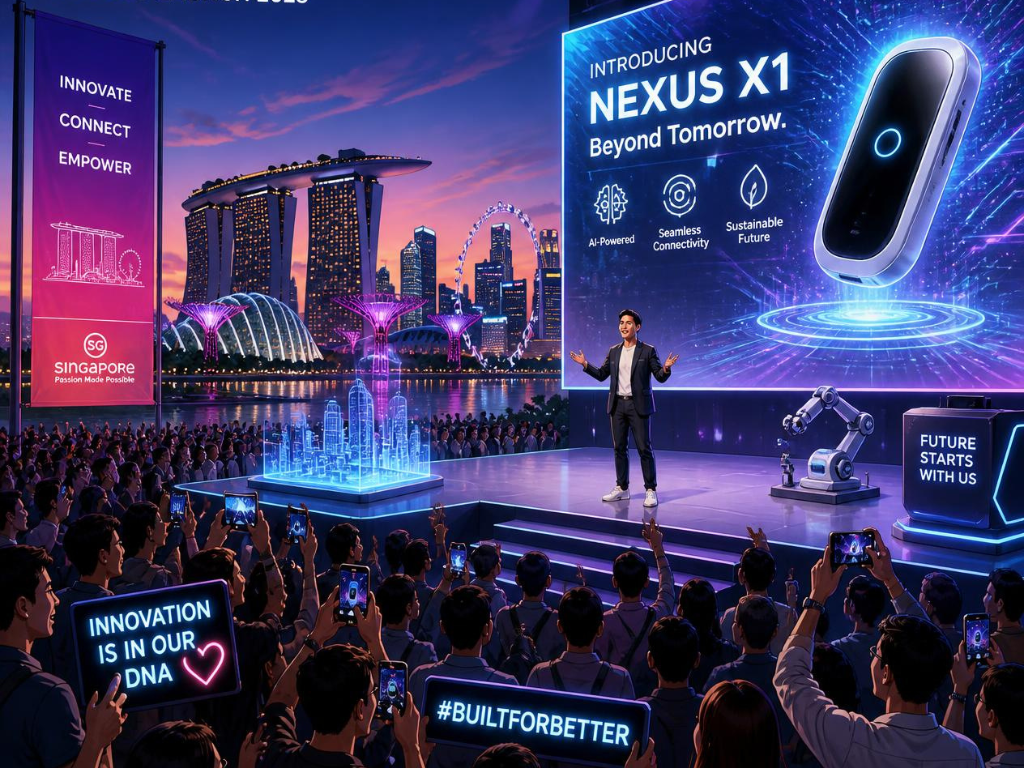
Product launches in Singapore fall into roughly three tiers set by scale and production level. An intimate or media-preview launch, under about 100 guests with a simple setup, commonly runs SGD 20,000 to SGD 50,000 in 2026 market terms. A mid-scale launch for 100 to 150 guests with full production and a built environment sits around SGD 50,000 to SGD 120,000. A flagship launch, a major brand at a landmark venue with elaborate reveal, LED, and talent, runs from roughly SGD 150,000 to SGD 300,000 and above.
The tiers differ in kind, not just size. An intimate launch buys a venue, basic AV, and hospitality for a press-and-partner audience. A mid-scale launch adds a custom-built environment, a designed reveal, and fuller production, which is where a how scope drives a build approach starts to matter. A flagship launch buys a transformed venue, broadcast-grade AV, and a headline moment engineered for reach. Pick the tier that matches the launch objective, because paying flagship money for a media preview, or expecting flagship impact on a preview budget, both waste the spend.
What drives the cost of a product launch up or down?
The biggest cost drivers are venue, production and build scale, guest numbers, F&B, and talent, in roughly that order of impact. Venue and F&B together often form the largest share of a launch budget, since premium hotel spaces and per-head catering scale fast with guest count. Production and build, the staging, AV, and custom environment, is the next major lever, and it rises steeply with ambition like a full LED reveal or a transformed space.
The levers move in both directions, which is where budget control lives. Guest count multiplies F&B and venue cost, so trimming the list has outsized effect, while a simpler reveal or a modular reusable build cuts production cost without gutting impact. Talent is a discretionary lever: a celebrity appearance can add a large sum, while a well-designed reveal can carry the moment without one. Identify your two or three biggest cost drivers first, because a launch budget is controlled by the handful of large levers, not by trimming the small ones.
How does a launch budget break down by line item?
A launch budget splits across venue, F&B, production and AV, fabrication and build, talent and entertainment, agency fee, and contingency. In 2026 Singapore terms, F&B and venue are frequently the largest lines, AV and production run from a few thousand for a basic setup to well over SGD 25,000 for full LED and multi-point sound, and the agency or management fee typically runs 10 to 15 percent of the total budget. Fabrication of a custom environment is a separate line that scales with the ambition of the build.
Reading a quote by these lines is how a brand avoids overpaying. A quote that looks cheap may have thinned the production and AV lines that carry the reveal, while an expensive one may be loaded with venue prestige that adds little to impact. The line items also reveal what is missing, since an omitted fabrication or dismantle line is a cost the brand will meet later. Break every quote into these lines before comparing, because two launch quotes are only comparable once you can see where each one actually spends.
How much of the budget goes to fabrication and the build?
Fabrication and the built environment are a major line for any launch that transforms its space, scaling from a modest stage set to a full custom world. The build covers the stage, feature walls, branded structures, and the reveal mechanism, fabricated to the approved design. As a directional anchor, Right-Space handles custom exhibition and event builds from around SGD 8,000 upward for a booth, and a full launch environment sits well above that as scale and finish rise.
Build cost is where in-house fabrication pays back. Building in a controlled workshop, rather than subcontracting, keeps finish and cost predictable, which is central to what a custom build involves. Right-Space runs a 25,000 square foot workshop with over 50 staff, so the build is quoted and controlled by one team. A modular build also lowers cost across repeat launches, since reusable structures return rather than being rebuilt. Treat fabrication as an investment that scales with reuse, because a custom build costed once and reused across launches is far cheaper per event than a fresh build each time.
How much should you budget for staging and AV?
Staging and AV should be budgeted as a core line, not a last-minute add, because they carry the reveal. In 2026 Singapore market terms, a basic staging and AV setup starts around SGD 2,500 to SGD 5,000, while a full launch rig with LED walls, multi-point sound, and show control can exceed SGD 25,000. The gap reflects whether the launch has a simple podium or a broadcast-grade reveal moment.
This is the line brands are tempted to trim and should not. A failed cue or weak sound at the reveal is unrecoverable, so the the staging and AV layer is where reliability has to be bought, including the crew to design and operate it, not just the equipment. Rehearsal time is part of this cost and part of the value. Protect the staging and AV line, because it is the machinery that makes the launch land, and a saved dollar here is often visible to every guest at the exact moment the launch depends on.
What about venue, F&B, and talent costs?
Venue, F&B, and talent are frequently the largest and most variable costs, and they usually sit outside a design-and-build scope. In 2026 Singapore terms, premium hotel venues can run several thousand to over SGD 20,000 per day, F&B scales at roughly SGD 40 to SGD 180 or more per head by format, and talent ranges from a few thousand for entertainment to a large sum for a celebrity. These lines are where guest count and prestige drive the total.
The strategic point is that these are often separate from the production partner’s scope. A design-and-build agency delivers the environment, staging, and install, while venue, catering, and headline talent are typically booked separately or by the client. Assuming they are included is a common budgeting error. Confirm which costs sit inside your production quote and which you carry directly, because the venue and F&B a brand forgets to budget are often larger than the entire production line it focused on.
How much contingency should you build in?
Build a contingency of 10 to 15 percent of the total launch budget, because change is standard, not exceptional, in event delivery. AV upgrades, extra guests, last-minute catering additions, and overtime are routine in Singapore launches, and a budget with no buffer turns each into a crisis. The 10 to 15 percent contingency is a widely used 2026 benchmark for exactly this reason.
Contingency is not padding; it is planning for known unknowns. A launch has a fixed date, so problems must be solved on the spot with money that has to already exist in the budget. Brands that omit contingency end up cutting quality late or overspending without approval. Hold back 10 to 15 percent as contingency from the start, because a launch date does not move for a budget shortfall, and the buffer is what lets you fix problems on the night instead of absorbing them into the show.
What hidden costs catch brands out?
The hidden costs are permits and licensing, overtime, dismantle and load-out, storage, and content production, which quotes often exclude. Permits or licensing for public entertainment, alcohol, or temporary structures can be required and can fall under SCDF’s Temporary Change of Use guidance, a real budget line brands rarely anticipate. Overtime for extended install windows, and dismantle and load-out after the event, are frequently outside a base quote.
These costs are avoidable surprises, not bad luck. A quote that ends at the reveal leaves dismantle for the client to arrange and pay for at midnight, and a venue overrun charges by the hour. Content production, video, and photography to capture the launch for its afterlife are also often separate. Keeping delivery controlled, the discipline behind how delivery stays controlled, is what keeps these from becoming emergencies. Ask what is excluded before you sign, because the hidden costs are hidden only in the quote, never in the final invoice.
How do you get the most launch for your budget?
You get the most launch per dollar by spending on the reveal and the guest experience, and saving on prestige that guests do not notice. The highest-impact spend is the moment guests remember and share, the reveal, the environment, the production, while venue prestige beyond what the brand needs often adds cost without impact. Concentrating budget on the peak moment beats spreading it thin across everything.
Several levers stretch a budget without cutting impact. Booking off-peak, in the January to March or July to August windows, can lower venue rates. Using a modular, reusable build spreads fabrication cost across future launches. And investing custom spend in one signature moment, rather than building every element bespoke, delivers most of the impact for less. You can find more planning detail in more event and build guides from Right-Space. Spend where guests look and save where they do not, because a launch remembered for one brilliant moment beats one that spread the same budget evenly and peaked nowhere.
Conclusion
A product launch in Singapore costs anywhere from SGD 20,000 for a media preview to SGD 300,000 or more for a flagship, and the figure follows the scope you choose. Read every quote by its line items, hold back 10 to 15 percent for contingency, budget for the hidden costs of permits and dismantle, and concentrate spend on the reveal. Do that and the budget buys impact where it counts rather than prestige where it does not.
Planning a product launch and need a real number? Ask Right-Space to scope your launch and quote the build, staging, and install against your objective, so you see exactly what your budget delivers before you commit.
FAQs About Product Launch Event Cost Singapore
What is the cheapest way to run a product launch in Singapore?
The most cost-efficient launch is an intimate, media-focused event, around SGD 20,000 to SGD 50,000 in 2026 terms, using a simpler venue, a modular build, and a well-designed reveal instead of celebrity talent. Right-Space scopes launches to the objective, so a focused press launch spends on the moment rather than on scale.
How much does a small product launch cost?
A small product launch in Singapore, under roughly 100 guests with a simple setup, commonly costs SGD 20,000 to SGD 50,000 based on 2026 market benchmarks. The figure depends on venue, production, and F&B. Right-Space scopes a small launch after the objective and venue are confirmed, since a modular build keeps a smaller launch’s cost efficient.
Is the agency fee separate from the production budget?
Usually yes. A full-service agency or management fee typically runs 10 to 15 percent of the total launch budget in Singapore, covering coordination, vendor management, and on-site execution, on top of production and build costs. Right-Space quotes design and build as a defined scope, so a brand can see the production cost and the management clearly.
How far ahead should you set a launch budget?
Set the budget as early as the launch date and objective are fixed, and confirm the partner at least two to three months ahead. Right-Space recommends engaging two to three months in advance for live events, and an early budget lets scope, contingency, and hidden costs be planned rather than discovered under deadline pressure.
Related Insights
Browse our latest articles on event management, exhibition design, and brand activation in Singapore.
View All Insights