

Brand Launch Event Singapore: Launch or Relaunch
25 August 2026
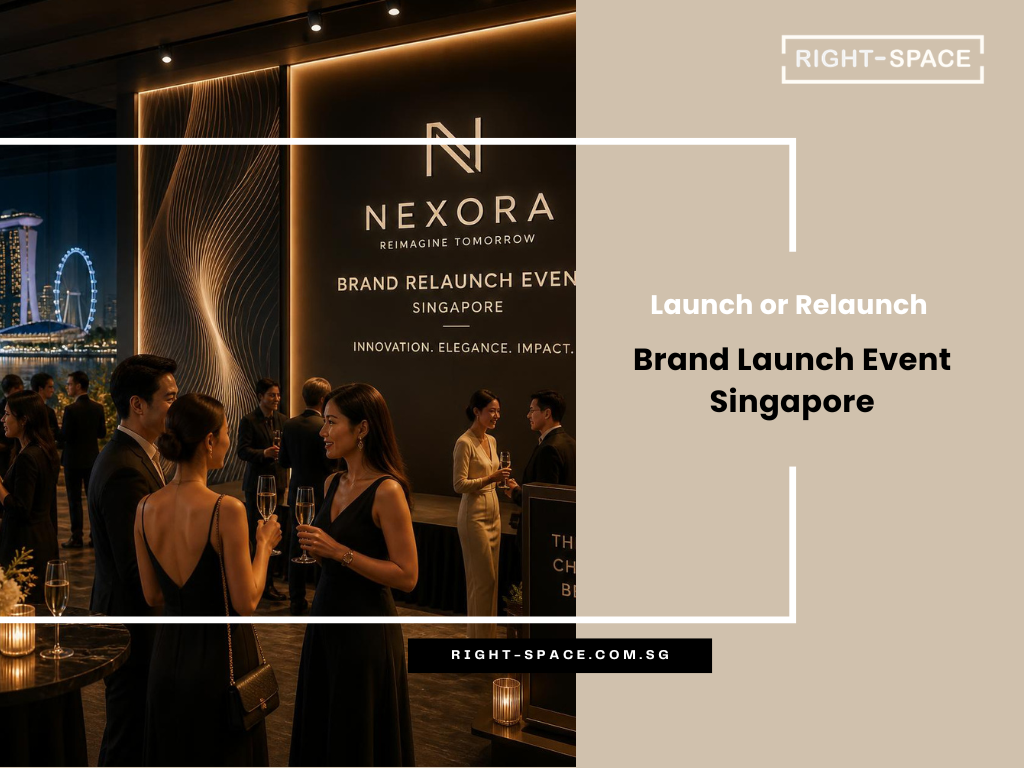
A brand launch event in Singapore is a positioning move, not a party, because it decides how the market first reads a new or changed identity. Experiential budgets keep rising, with 74% of Fortune 1000 marketers increasing experiential spend in 2025 per EventTrack, and a launch is where that spend earns its return. This blog walks you through launching or relaunching a brand well. Start with our live event design and production scope.
What is a brand launch event, and how is it different from a product launch?
A brand launch event is a live experience that introduces or reintroduces a whole brand, its identity, values, and world, to an audience of press, partners, and customers. It differs from a product launch, which spotlights a single new item. A brand launch sells the world; a product launch sells the thing. The distinction changes everything about the design brief.
The scope is broader and the stakes are higher. A product launch needs a strong reveal of one item, while a brand launch has to make an entire identity feel real in a room, through environment, tone, sensory detail, and narrative. A rebrand raises the stakes again, because the audience already holds an old impression that the event has to shift. Right-Space designs brand launches, relaunches, and activations as immersive environments, drawing on work since 2000. Treat a brand launch as world-building, not event decoration, because the audience leaves with an impression of the whole brand, not a memory of one product.
When should a company run a brand launch or relaunch event?
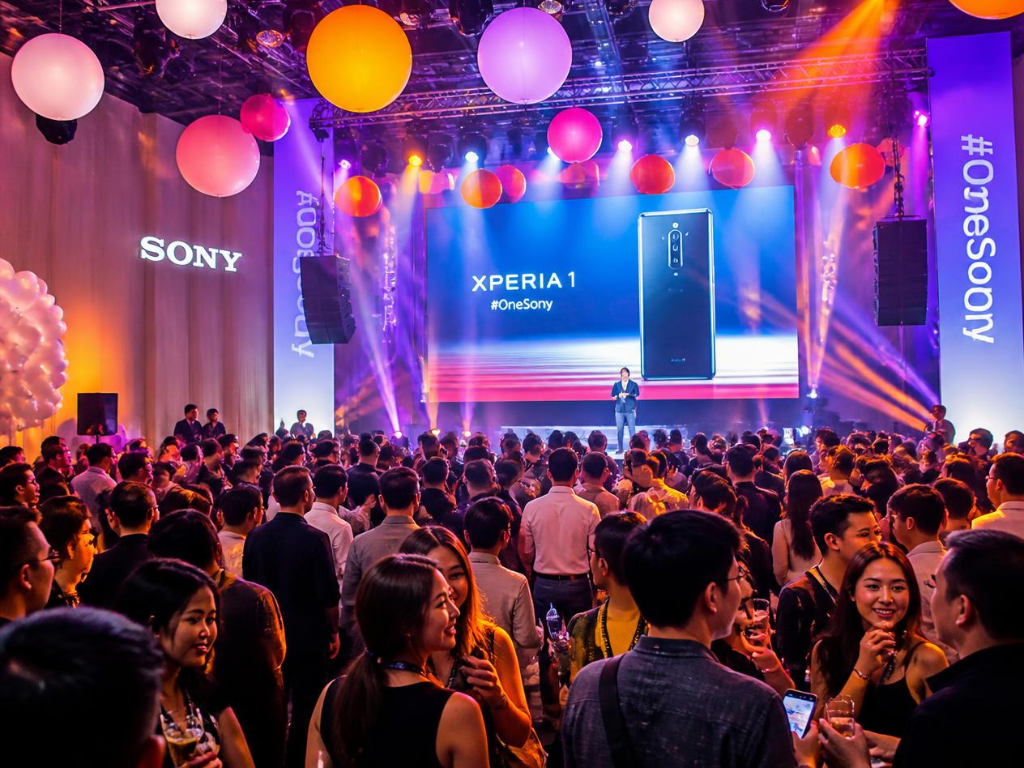
A company should run a brand launch when it introduces a new brand, completes a rebrand, enters a new market, or repositions after a strategic shift. These are the moments when perception is genuinely up for grabs and a live experience can set the narrative before competitors or the market define it. A launch event compresses months of brand messaging into one high-impact moment that press and partners experience directly.
The trigger is a meaningful change in what the brand means, not the calendar. A cosmetic refresh rarely justifies a full launch, while a genuine repositioning, a merger, or a market entry does. The honest test is whether the audience’s understanding of the brand needs to change, since a live event is the fastest way to reset perception at scale. Run a launch event when the brand’s meaning has shifted enough that the market needs to be shown, not told, because a real repositioning deserves an experience and a minor tweak does not.
What makes a rebrand launch different from a first-time brand launch?
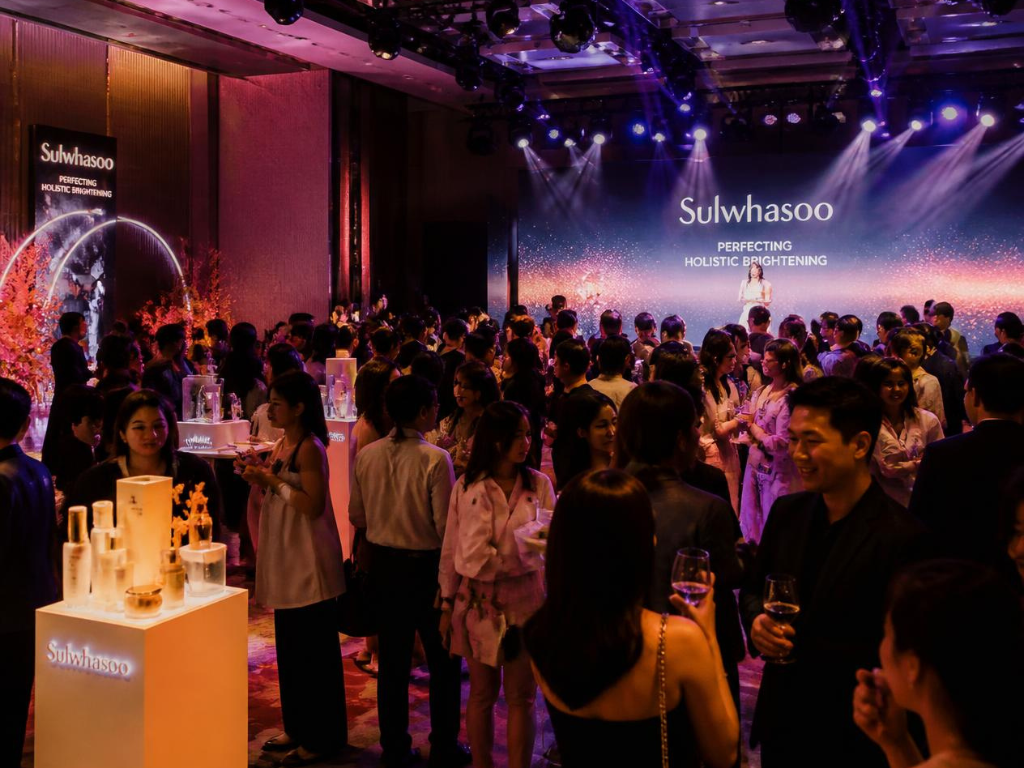
A rebrand launch has to manage a transition, retiring an old identity while installing a new one, which a first-time launch never faces. A new brand writes on a blank page; a rebrand overwrites an existing impression, so the event must acknowledge the old, signal why it changed, and make the new identity feel like an upgrade rather than a loss. Audiences carry equity in the old brand, and a launch that ignores that reads as erasure.
The sharpest rebrand launches sequence the audience carefully. The internal launch comes first: staff should experience and understand the new identity before the public does, because employees are the brand’s front line and a confused team undermines the external message. The reveal itself should retire the old identity deliberately, marking the change rather than pretending the past did not exist. Launch the rebrand internally before externally, because a brand that surprises its own staff with a new identity has already lost the first audience that has to sell it.
How do you design a brand world for a launch?
You design a brand world by transforming a venue into a complete, immersive expression of the brand, so guests step inside the identity rather than look at it. Every surface, the entrance, the lighting, the materials, the sound, the scent, carries the brand, turning a neutral space into a place that could only belong to this brand. This is the core of brand-led experience design, where environment does the persuading.
Venue transformation is a design-and-build discipline, not a dressing job. Building a convincing brand world takes fabricated feature walls, custom environments, and integrated lighting and AV, the kind of concept-to-build environments that only hold together when designed and built by one team. The environment has to be buildable within the venue’s constraints, which is where what makes an environment buildable decides whether the concept survives contact with the space. Build the brand world as a total environment, because a launch guest should feel the brand the moment they enter, not read it off a banner.
How do you design the guest journey at a brand launch?
You design the guest journey as a deliberate sequence, arrival, immersion, reveal, share, and exit, so every guest moves through the brand story in a controlled order. The journey starts before the door, with arrival that sets tone, then leads guests through an immersive environment toward a designed reveal, gives them a moment worth sharing, and sends them out with a clear takeaway. Left unplanned, guests wander and the narrative collapses into a networking drinks.
Sequencing is what turns a room into a story. A guest journey choreographs where people go, what they see first, and when the reveal lands, which only works when the flow, sightlines, and cues are built into the environment and rehearsed, the discipline behind keeping execution under control. The reveal should sit at the emotional peak of the journey, not the start. Design the guest journey as a directed sequence, because a brand launch that lets guests drift loses control of the exact impression it exists to create.
What makes a strong brand reveal moment?
A strong brand reveal is a single, designed moment where the new identity lands with emotional force, timed to the peak of the guest journey and engineered to be felt, not just seen. The reveal is the climax: a coordinated moment of lighting, sound, video, and often a physical transformation that makes the new brand appear as an event, not an announcement. A reveal that dribbles out across the evening has no peak and no memory.
The mechanics have to fire together. A reveal depends on cues landing in the same second, a lighting shift, an audio sting, a curtain or projection moment, which only works when one team designed and rehearsed the sequence against the built environment. For a rebrand, the reveal should mark the transition, visibly moving from the old identity to the new. Engineer the reveal as one rehearsed peak moment, because a brand identity that appears gradually is forgotten gradually, while one that lands as a designed moment is remembered as one.
How do you build in a media moment for press and social?
You build in a media moment by designing specific, on-brand scenes engineered to be photographed, filmed, and shared, so the launch travels far beyond the guest list. Press need a clear headline visual and a quotable reveal; social spread needs photogenic, on-brand moments that guests want to post. The content generated on the night is often the launch’s largest audience, since experiential campaigns produce a content multiplier that carries the brand to people who were never in the room.
The media moment is a design decision, not luck. A launch should include a signature visual, a feature installation or reveal set piece, framed and lit so every phone and press camera captures the brand correctly. Experiential events drive strong recall and social amplification, which is why the shareable scene is planned, not hoped for. Design the media moment into the environment, because a launch that is beautiful in the room but flat on camera wastes the reach that makes the event worth its budget.
How do you keep the launch true to the brand identity?
You keep a launch true to the brand by deriving every design decision, palette, materials, tone, music, from the brand identity, so nothing on the night contradicts what the brand claims to be. A launch that looks generic or borrows a trend that clashes with the brand undermines the very identity it is meant to establish. Coherence between the brand and the experience is what makes the launch believable.
Discipline here separates a launch from a party. A premium brand needs restraint and quality finishes; a bold challenger brand needs energy and edge, and the environment, staging, and even the guest journey should express that specific character. Where this breaks down is the launch designed for spectacle alone, disconnected from the brand, which impresses for an evening and communicates nothing. Derive every element from the brand identity, because a launch that could belong to any brand has failed the one job a brand launch has.
How do you measure whether a brand launch worked?
You measure a brand launch on reach, earned media, sentiment, and behaviour change, not on attendance alone. Turnout is an input, not a result. The real measures are how far the launch traveled through press and social, what the coverage and conversation said about the brand, and whether perception and intent shifted afterward. A packed room that generates no coverage and no perception change is an expensive private party.
Meaningful metrics tie back to the launch objective. Earned media value, social reach and engagement, share of voice, sentiment analysis, and post-event brand tracking show whether the repositioning landed, which is the strategic layer behind the wider event marketing scope. Experiential campaigns are designed as documented campaigns, not standalone nights, because the downstream reach is where the return sits. Measure the launch on perception and reach, not headcount, because a brand launch exists to change what the market thinks, and only reach and sentiment show whether it did.
How early should you start planning a brand launch?
Start planning a brand launch at least three to six months ahead, and earlier for a rebrand with a built brand world, because design, fabrication, and coordination all take real time. Right-Space recommends engaging at least two to three months in advance for live events, and a launch with a custom immersive environment needs more, since building a convincing brand world involves design, fabrication, approvals, and rehearsal. A rebrand adds internal-launch coordination on top.
Lead time protects ambition. A brand that engages early can commission a full custom environment, sequence internal and external launches, and rehearse the reveal, while a late start shrinks the launch to what can be assembled fast. You can find more planning detail in more launch and activation guides from Right-Space. Immersive venue transformations can also fall under SCDF’s Temporary Change of Use guidance, which belongs in the schedule early. Begin planning as soon as the brand or rebrand is confirmed, because the earlier the build starts, the more brand world you can actually deliver.
Conclusion
A brand launch is world-building with a fixed date and a strategic job: to reset what the market thinks. It sells the whole brand, not one product, through an immersive environment, a directed guest journey, and a reveal engineered to be felt and shared. For a rebrand, launch internally first and let the reveal retire the old identity. Measure it on reach and sentiment, not headcount. Do that and the launch changes perception rather than just filling a room.
Launching or relaunching a brand in Singapore this year? Ask Right-Space to design and build the brand world, guest journey, and reveal as one accountable production, so your identity lands exactly as intended on the night.
FAQs About Brand Launch Event Singapore
How much does a brand launch event cost in Singapore?
Cost scales with the scale of the brand world, the reveal mechanism, and the venue transformation, so an intimate press reveal sits far below a full immersive relaunch. Right-Space scopes a brand launch after the concept, venue, and objective are confirmed, because environment build and production complexity, not guest count alone, drive the figure.
How long does it take to plan a rebrand launch?
A rebrand launch needs three to six months, and more for a fully built brand world, because it adds internal-launch coordination and old-to-new transition planning on top of a standard launch. Right-Space recommends engaging at least two to three months ahead for live events, with custom immersive environments requiring the longer end of that range.
What is the difference between a brand launch and a product launch?
A brand launch introduces or reintroduces a whole brand identity and world; a product launch spotlights a single new item. A brand launch sells the world, a product launch sells the thing. Right-Space designs both, but a brand launch, especially a rebrand, requires deeper environment and narrative work than a single-product reveal.
Can you relaunch a brand without a big event?
Yes, but a live relaunch shifts perception faster than digital alone. A smaller press reveal or an internal-first launch can work for a modest repositioning. For a genuine rebrand where market perception must change, an experiential event lets press and partners feel the new identity directly, which EventTrack-cited experiential research links to stronger recall than advertising.
Related Insights
Browse our latest articles on event management, exhibition design, and brand activation in Singapore.
View All Insights