

Brand Launch Party Singapore: Production & Flow
26 August 2026
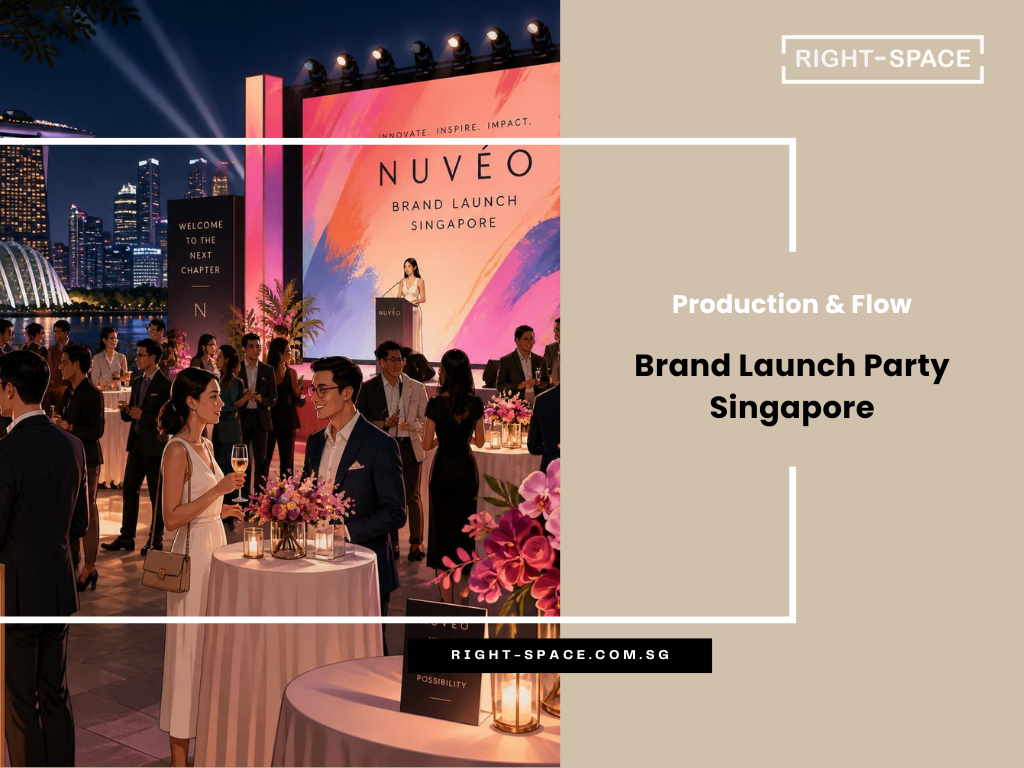
A brand launch party in Singapore lives or dies on production and guest experience, because the energy in the room is what guests remember and post. Experiential spend keeps climbing, with 74% of Fortune 1000 marketers increasing it in 2025 per EventTrack, and a launch party is where that spend becomes a night. This blog walks you through producing one that runs cleanly. Start with our live event design and production scope.
What is a brand launch party, and how is it different from a launch event?
A brand launch party is a celebration-format launch that introduces a brand or milestone through a social, hospitality-led experience with entertainment, food, and atmosphere. It differs from a formal launch event, which centres on a staged reveal and press moment. A launch event is designed around a message; a launch party is designed around an experience. The brief shifts from narrative to night.
The production priorities change with the format. A launch party leads with guest experience: flow, energy, entertainment, and hospitality, rather than a keynote and a scripted reveal. That does not make it less produced; a good party is more operationally complex, because hundreds of moving guests, live entertainment, bar service, and a pacing curve all have to run at once. Right-Space produces launch parties, corporate celebrations, and activations as designed experiences, drawing on production work since 2000. Treat a launch party as a produced experience, not a catered room, because the difference between a memorable night and an awkward one is entirely in the production.
What does production for a launch party actually involve?
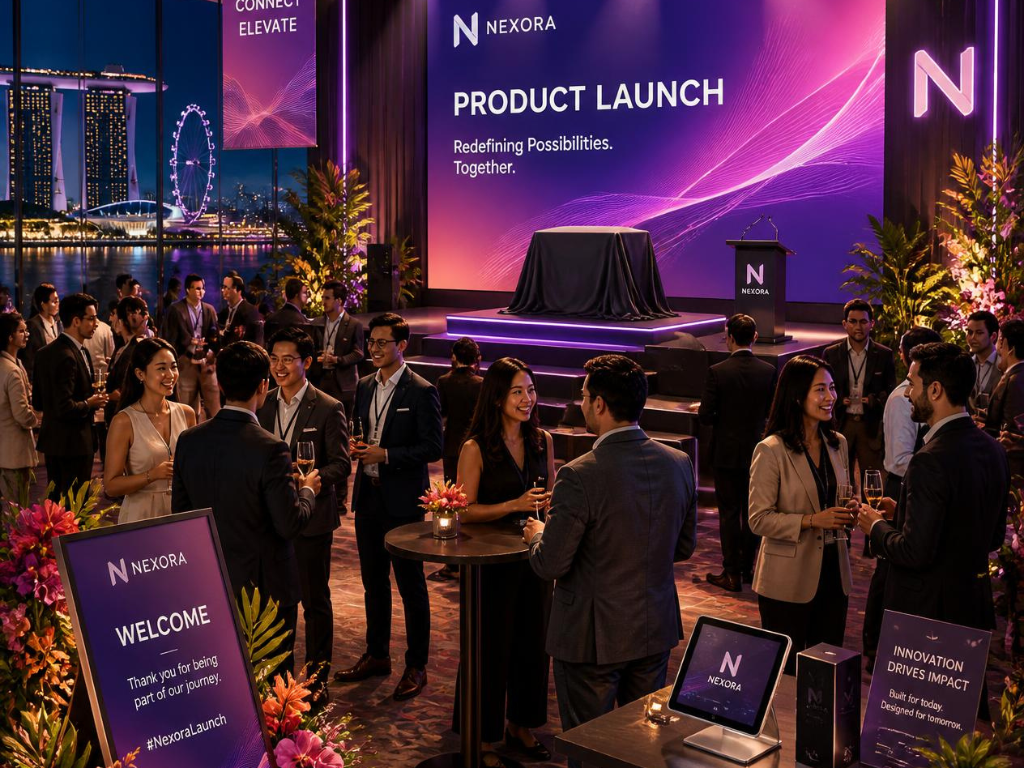
Launch party production covers the staging, AV, lighting, power, and technical infrastructure that turn a venue into an atmosphere, plus the crew who run it. The physical layer includes a stage or performance area, sound and video systems, lighting rigs, and the power distribution to feed them, the same staging and build for scale that any large live event depends on. None of it is decorative; it is the machinery that makes a room feel alive.
Production is a coordination job as much as a technical one. Sound has to carry across a moving crowd, lighting has to shift the mood through the night, and the technical build has to load in and test before doors open, often in a tight venue window. A party that treats production as an afterthought ends up with flat lighting, patchy sound, and dead zones no one stands in. Build the production infrastructure to the room and the crowd size, because a launch party’s atmosphere is engineered by staging, sound, and lighting, not conjured by a guest list.
How do you design guest flow and crowd management at a launch party?
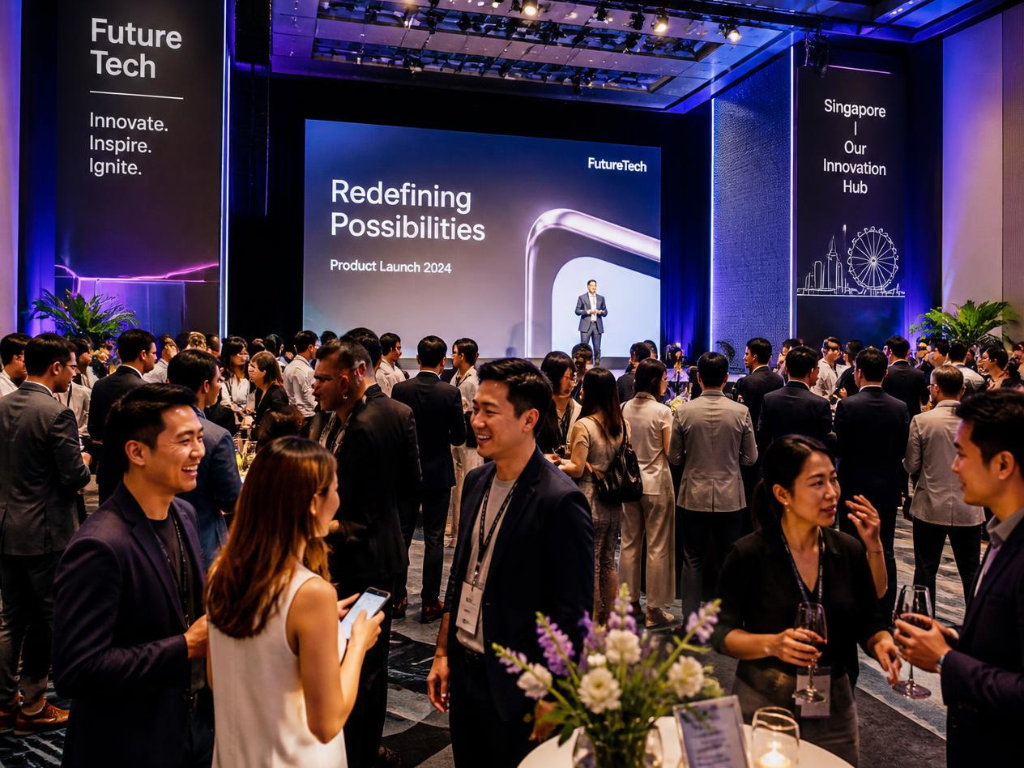
Guest flow is designed by planning how a crowd moves through the space, from arrival and registration through the bar, the entertainment, and the exit, so the room never jams or empties awkwardly. It is a safety and experience problem before it is a hospitality one. Bottlenecks at the entrance, a bar everyone reaches at once, or a dead corner all break the night, and at scale they become a crowd-safety issue.
The layout has to work for a moving, drinking crowd, not a seated audience. Zoning the space, placing bars to spread demand, and keeping circulation routes and exits clear are what keep a full room comfortable, which is where what makes a setup buildable meets crowd planning. Occupancy limits and egress are fixed by the venue and enforced, so the guest count and layout must respect them. Design guest flow around how a crowd actually moves, because a launch party that looks great empty can become unsafe and unpleasant the moment it fills.
How does entertainment integration work at a brand party?
Entertainment integration means programming the DJ, live acts, or performances into the run-sheet so the energy builds and peaks at the right moments, rather than playing as background. A launch party’s entertainment is a pacing tool: a warm arrival set, a rising middle, a peak moment tied to the brand, and a wind-down. When entertainment is timed to the night’s arc, the room moves together; when it is booked and left to improvise, the energy drifts.
The integration is where a party becomes produced rather than assembled. A performance, a headline act, or a signature moment should land at the emotional peak and connect to the brand, not sit as a disconnected slot. Cueing entertainment to the run-sheet, and to lighting and sound changes, is what makes a peak feel designed. Program entertainment as part of the night’s arc, because a great act at the wrong moment lifts nothing, while the right moment tied to the brand becomes the thing guests remember and share.
How do F&B and bar service fit into the production?
Food and beverage are a core part of launch party production, shaping both guest experience and how the crowd moves through the space. Bar placement and service speed directly affect flow, since a single slow bar creates a queue that jams the room, while spread, well-staffed bars keep the crowd circulating. F&B format, whether canapes, stations, or seated, sets the tone and the pace of the evening.
The hospitality layer has to be planned against the crowd, not bolted on. Service capacity should match guest numbers so waits stay short, and food stations should sit where they draw people through the space rather than into a pileup. On-brand touches, a signature cocktail or a themed menu, extend the brand into the hospitality without feeling forced. Plan F&B and bar service as part of the flow design, because a launch party where guests spend the night queuing for a drink has lost the room, however good the entertainment is.
What is a run-sheet, and why does it run the night?
A run-sheet is the minute-by-minute operational schedule of a launch party, listing every cue, arrival, speeches, entertainment sets, F&B service, and technical changes, in sequence with who is responsible for each. It is what makes a party feel effortless from the guest side, because everyone running the night is working from the same timed plan. Without it, cues get missed, moments clash, and the energy sags at the wrong time.
The run-sheet is the party’s equivalent of the run-of-show, and it is the backbone of professional delivery, the discipline behind how a show stays under control. A stage manager runs the night against it, calling cues so lighting, sound, entertainment, and speeches land on time. Worth noting: the difference between a slick party and a chaotic one is almost always the run-sheet, not the budget. Build and rehearse a detailed run-sheet before the night, because a launch party that improvises its timing is a launch party that loses its energy exactly when it should peak.
How do lighting and atmosphere shape a launch party?
Lighting is the single biggest lever on a launch party’s atmosphere, shifting a venue from arrival mood to peak energy to wind-down through the night. A launch party uses lighting in zones and states: warm and bright for arrival and networking, dynamic and saturated for the peak, softer for the close. Static lighting leaves a party feeling flat, while a designed lighting scheme carries the crowd through the emotional arc.
Atmosphere is engineered from several layers working together. Lighting, sound level, staging, and even haze combine to make a room feel intimate or electric on cue, and these states are programmed into the run-sheet so they change with the night. Colour and intensity should also carry the brand, tying the atmosphere back to identity. Design lighting as a changing system, not a fixed setting, because a launch party’s energy is largely a lighting decision, and a room lit the same all night never builds the peak a launch deserves.
What safety and licensing rules apply to a launch party in Singapore?
A launch party in Singapore must meet occupancy, fire-safety, and egress rules, and often licensing for entertainment and alcohol. Venue occupancy limits are fixed and enforced, exit routes must stay clear, and temporary structures or enclosed setups can fall under SCDF’s Temporary Change of Use guidance. A crowd, alcohol, and entertainment together raise the safety bar above a seated event.
Compliance is a production responsibility, not a formality handled late. Crowd management planning, clear egress, trained crew, and any required licences for public entertainment or liquor should be built into the plan from the start, since a party that exceeds occupancy or blocks an exit is shut down, not warned. Materials and staging must meet fire-safety standards the same as any event. Plan safety and licensing into the production early, because a launch party is a crowd event first, and crowd safety is the one part of the night that cannot be improvised.
How do you keep a party on-brand and not just a good night out?
You keep a launch party on-brand by deriving the atmosphere, entertainment, hospitality, and design from the brand identity, so the night could only belong to this brand. A generic party with the logo added is a missed opportunity; a launch party should express the brand’s character through its music, its look, its signature moments, and its hospitality. The experience is the message, so it has to say something specific.
This is where a launch party earns its budget beyond the fun. A brand-led approach, the thinking behind brand-led experience design, ties every choice back to the brand: a challenger brand’s party feels bold and loud, a premium brand’s feels refined and exclusive. Where this breaks down is the party thrown for spectacle alone, disconnected from the brand, which entertains for a night and communicates nothing. Derive the party from the brand identity, because a launch party that could be any brand’s night out has spent a launch budget on a party and wasted the launch.
How early should you book a launch party production team?
Book a launch party production team at least two to three months ahead, and earlier for a large party with custom staging or a built environment. Right-Space recommends engaging at least two to three months in advance for live events, and a party with significant production, venue transformation, or headline entertainment needs more lead time to design, build, and rehearse. The date is fixed, so the schedule works backwards from it.
Lead time protects the night. Booking early secures the venue, the entertainment, and the production crew, and leaves time to design guest flow, build the run-sheet, and clear safety and licensing, while a late booking narrows the party to whatever is still available. You can find more planning detail in more event and production guides from Right-Space. Engage the production team as soon as the date and venue are set, because the earlier the planning starts, the more of the night can be designed rather than improvised.
Conclusion
A brand launch party is a produced experience, and the experience is the message. The energy guests remember comes from staging, lighting, entertainment timed to a run-sheet, F&B that keeps the crowd moving, and guest flow that stays safe as the room fills. Keep every choice tied to the brand, plan crowd safety in early, and rehearse the run-sheet. Do that and the party lands as a night the brand owns, not a good time anyone could have thrown.
Planning a brand launch party in Singapore this year? Ask Right-Space to produce the staging, guest flow, entertainment, and run-sheet as one accountable production, so the night runs cleanly and stays unmistakably on-brand.
FAQs About Brand Launch Party Singapore
How much does a brand launch party cost in Singapore?
Cost scales with guest numbers, production scale, entertainment, and venue, so an intimate rooftop party sits far below a large produced celebration with staging and headline acts. Right-Space scopes a launch party after the venue, guest count, and production level are confirmed, because production and entertainment complexity, not headcount alone, drive the figure.
How many guests should a launch party have?
Guest numbers are set by the objective and the venue’s occupancy limit, not a fixed rule, so a press-and-partner party runs smaller than a public celebration. The venue’s fixed occupancy cap, enforced under Singapore fire-safety rules, is the hard ceiling. Right-Space plans guest flow and crowd management to the confirmed number and the room.
Do you need a permit for a launch party in Singapore?
Often yes. A launch party can require licensing for public entertainment or alcohol, and temporary structures or enclosed setups can fall under SCDF Temporary Change of Use rules. Occupancy and egress are always enforced. Right-Space builds the required approvals and crowd-safety planning into the production rather than treating them as last-minute paperwork.
What is a run-sheet in event production?
A run-sheet is the minute-by-minute schedule of a live event, listing every cue for arrivals, speeches, entertainment, F&B, and technical changes, with who owns each. For a launch party, it paces the night so energy peaks on time. Right-Space runs the party against a rehearsed run-sheet, with a stage manager calling cues.
Related Insights
Browse our latest articles on event management, exhibition design, and brand activation in Singapore.
View All Insights