
Event Production Company Singapore: How Right Space Runs
28 February 2026
An event production company Singapore brands trust is not hired for a nice deck. It is hired for control: turning a concept into a build, a build into an install, and an install into a show that runs cleanly. This blog will walk you through how Right Space coordinates design, fabrication, and on-site setup so execution does not rely on luck. Start with their Events and Marketing scope.
What an “event production company” actually does after concept approval
Many brands use “production” to mean AV and stage. In real delivery work, production is broader. It covers the full chain that determines whether the event looks right, works safely, and stays stable under venue pressure.
An event production company’s job is to convert creative intent into buildable instructions, then manage the dependencies that make on-site setup possible:
- design coordination and technical translation
- fabrication readiness and finish control
- logistics planning and delivery timing
- installation sequencing and site safety
- rehearsal and show-day command structure
This is also where event design and build Singapore projects either hold together or unravel. Design can be approved in minutes. Execution can fail for weeks.
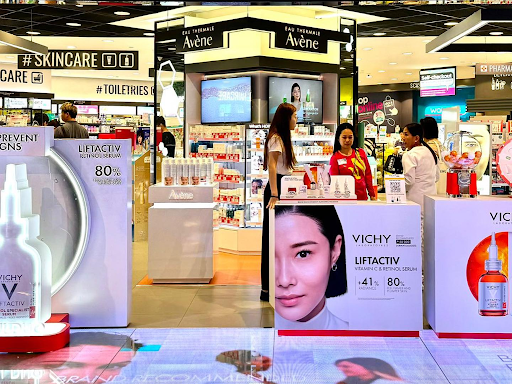
Why execution breaks when design, fabrication, and site teams are split
When the creative team, fabricator, AV vendor, and installation crew operate as separate islands, problems do not appear as “big issues.” They appear as tiny mismatches that compound:
A wall is 30mm off, so the lightbox cannot sit flush.
The LED content is the wrong resolution, so text crops.
The queue line blocks a tenant entrance, so mall ops intervenes.
Power points are not where the plan assumed, so cables cross walkways.
None of these are conceptual failures. They are coordination failures.
Right Space’s value as a production partner sits in the “in-between work” that brands rarely see. That work is not glamorous, but it is what protects show day.
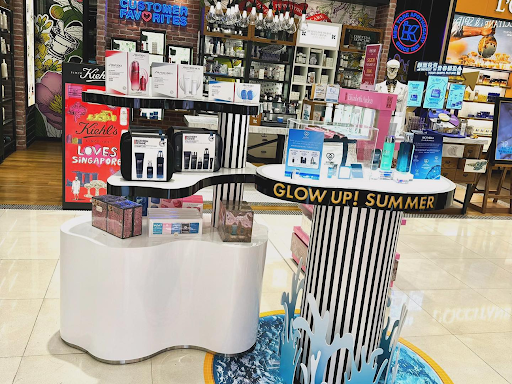
How Right Space coordinates the chain from concept to setup
Coordination is not a meeting cadence. It is a system of decisions, documents, and lock points that reduce ambiguity.
Step 1: Translate concept into buildable scope, not “nice-to-have”
Approved concepts often contain silent assumptions: hidden storage, flawless finishes, invisible cable routes, and “floating” elements that look effortless in 3D.
Production teams turn those assumptions into measurable scope:
- footprint, height, clearances, access points
- finish level and surface durability
- where stock lives and how resets happen
- What must be modular for transport and lifts
- What can be simplified without breaking the experience
A practical production partner takes a stance early: what is feasible inside your timeline and venue constraints, and what will introduce risk.
Step 2: Lock technical inputs early so fabrication does not guess
Fabrication does not run on “intent.” It runs on specifications.
When a build is heading into production, the team needs technical clarity on:
- dimensions and tolerances
- materials and substrate choices
- print specs, lamination, mounting method
- structural logic for stability and handling
- integration points for AV, lighting, and interactive elements
If those inputs arrive late, you get “interpretation builds.” Interpretation is where brand quality becomes inconsistent across panels, counters, and feature walls.
Step 3: Use lock points to protect lead times
Most production delays are not vendor incompetence. They are approvals arriving after the production window is already shrinking.
Lock points are how an event production company protects timeline:
- design freeze for layout and visual direction
- technical freeze for dimensions and materials
- print lock for artwork and file specs
- fabrication lock for structure and finishing
- content lock for LED and interactive playback
Without lock points, brands keep changing, vendors keep re-quoting, and the schedule becomes reactive.
Step 4: Orchestrate vendors with acceptance criteria, not “coordination”
Multi-vendor management works only when each vendor’s output has a clear definition of “done.”
That definition includes:
- tolerances that must be met
- finish quality standards
- handover format (drawings, cue sheets, wiring diagrams)
- testing requirements before load-in
- what happens when something fails inspection
This is the difference between a vendor “delivering” and the project being install-ready.
Fabrication: what brands underestimate until it is too late
Fabrication is where your budget turns into physical reality. It is also where most “small design changes” become expensive.
Finish systems are a real decision, not decoration
A premium finish behaves differently under venue lighting, handling, and cleaning. Gloss, matte, textured laminates, and painted surfaces age differently over a three-day event with high traffic.
A production-ready team asks early:
- Does the surface need to resist fingerprints
- Will staff wipe it down often
- Will it scratch during load-in
- Will it reflect harsh overhead lights
- Will seams be visible in photo angles
When these questions are ignored, brands end up with an environment that looks good from one angle and cheap from the rest.
Pre-assembly is what prevents on-site rework
If major components can be test-fitted before load-in, the team catches problems when time is still available:
- misaligned joints
- wrong fasteners
- missing access panels
- prints that do not wrap cleanly
- unstable bases or uneven floors
Skipping pre-assembly to “save time” usually costs time on-site. On-site time is the most expensive time.
On-site setup: installation sequencing is where real production skill shows
A show site is not a workshop. It has access limits, loading bay schedules, lift constraints, noise controls, and other vendors competing for space.
Why installation sequencing matters more than speed
Speed is meaningless if the sequence is wrong.
A disciplined install sequence typically follows logic:
- mark-out and floor protection
- structural frames and anchoring
- power distribution and cable trunking
- AV rig, LED placement, lighting focus
- walls, counters, cladding, feature surfaces
- print application and finishing details
- testing, snag fixes, final safety walk
If finishing happens before cables and power are planned, the team rips work out and redoes it. That is where quality drops.
Site safety is part of production, not a separate topic
Work at height, cable management, and load-in traffic are not optional concerns. They directly affect setup time and incident risk.
Singapore’s WSH guidance defines work at heights as a high-risk activity and outlines why controls matter. If your setup involves ladders, truss, overhead signage, or lighting focus, the baseline reference is the WSH Council’s overview on work at heights.
A production team that plans safety well also plans time well. Unsafe setups cause stops. Stops kill schedules.
Venue and regulatory realities that affect Singapore setups
Brands often assume compliance is “the venue’s job.” In reality, the venue enforces, but the brand and production team must plan within the conditions.
Temporary event setups can trigger fire safety requirements
If a setup changes how a space is used, introduces enclosed structures, or requires specific layout controls, SCDF’s Temporary Change of Use process may apply depending on the scenario. The official guidance is here.
This affects production because fire safety conditions can influence layout, access paths, and sometimes build elements. Late compliance feedback can force redesign after fabrication has started.
Risk management is an operational discipline, not a checklist
If you want a practical standard for how teams should identify and control hazards on-site, MOM’s risk management guidance is a clear baseline.
A mature event production partner builds risk controls into method statements and install sequencing, not into a last-minute form.
How rehearsal and show control connect back to build decisions
Brands often separate “build” from “show.” That split is artificial.
Build decisions affect show reliability:
- where cues happen and what sightlines exist
- whether AV access panels exist for quick fixes
- how fast resets can be done between segments
- where staff can stage without being seen
- how sound and lighting behave inside the structure
If you want the deeper view on how show-day planning is handled, Right Space’s related guide on live event production company Singapore is a relevant internal reference because it frames rehearsal, cue control, and show-day command as part of execution, not “extra.”
What to ask when choosing an event production company in Singapore
A commercial decision guide only works if it changes procurement questions.
Ask for execution artefacts, not only portfolio photos
Request examples of:
- technical drawings with dimensions and materials
- installation sequencing plan
- snag list and acceptance checklist
- Method Statement Format for build and install
- How vendor handovers are structured
These artefacts reveal how the team thinks under pressure.
Ask how they handle change control
Late changes happen. The question is whether the company can manage them without destroying the schedule.
A serious answer includes:
- What can change without impact
- What triggers reprint or rebuild
- How cost and time trade-offs are approved
- Who has authority to make calls on-site
If the answer is vague, you are buying uncertainty.
Ask who owns integration across vendors
You want one accountable owner for the end-to-end outcome. If that owner is missing, the brand becomes the coordinator, and failures get blamed on “miscommunication.”
Conclusion
Event production is coordination under constraints: turning a concept into buildable specifications, managing fabrication timelines, and executing on-site setup with a sequence that protects quality and safety.
If you want an execution plan you can audit before show week, brief Right Space with your venue, timeline, and the outcomes each zone must deliver so the team can align design, fabrication, and setup as one system.
FAQs About Event Production Company Singapore
What does an event production company in Singapore handle that agencies often miss?
A production company owns the conversion of concepts into buildable instructions, then manages fabrication readiness, logistics, installation sequencing, and show-day control. The key difference is integration ownership across vendors, not just planning and coordination.
How early should a brand lock technical drawings and materials?
Before fabrication begins. Once print specs and structural details are in production, late changes often trigger rework across cladding, finishing, wiring routes, and install sequencing, which compresses the schedule and reduces quality.
How do I know if an event build is production-ready?
Production-ready work includes dimensioned drawings, materials schedules, print and mounting specs, power planning, a defined install sequence, and a testing plan for AV and interactive elements. If vendors are “interpreting,” it is not ready.
Do Singapore venues require special compliance planning for builds?
Sometimes. Certain temporary event setups may fall under SCDF Temporary Change of Use requirements depending on the scenario, and work-at-height and risk management controls affect how installation is planned. Align early to avoid redesign during build. (Sources: SCDF, MOM)
Why do show-day problems often come from build decisions?
Because access, cabling, sightlines, and reset speed are designed into the environment. If build decisions ignore rehearsal and cue control needs, the show becomes fragile and fixes take longer on-site.