
Event Space Planning Singapore: Layout, Flow & Visitor Psychology
10 December 2025
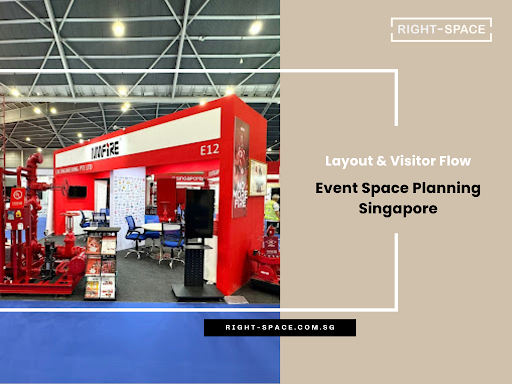
Event space planning in Singapore is not just about fitting booths into a hall. It shapes how visitors move, discover, interact, and make decisions. This guide explains how layout strategy, visitor flow and behaviour influence the experience, and shows you how to design exhibitions that feel intuitive, engaging and commercially effective.
1. Start With Strategy: Setting the Foundation for a Well-Designed Exhibition
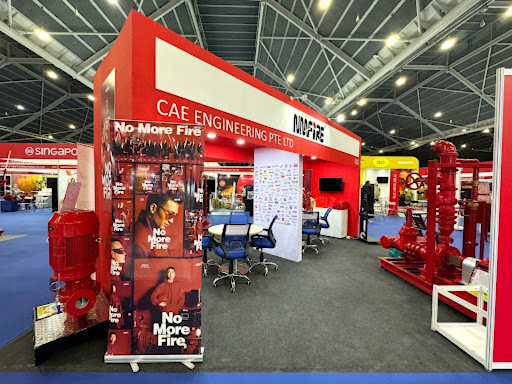
Event space planning in Singapore works best when it starts with clear intent rather than available square metres. Before drawing any lines on a floor plan, define what the event is meant to achieve.
Clarify the Purpose
Each exhibition serves a different objective. Some exist to generate leads. Others focus on industry education, regional matchmaking or high-visibility product demonstrations. Knowing the true purpose helps you allocate space more effectively.
If you plan to incorporate showcases, immersive activations or branded interactions, linking these with supporting content such as the event and spatial design services described on the event and marketing services page can help refine your creative plan.
Understand Visitor Profiles
Singapore exhibitions attract a diverse mix of trade buyers, regional distributors, C-suite visitors, media representatives, and younger attendees. Mapping their needs and identifying the journey they typically follow lets you build routes that feel natural rather than forced.
A typical visitor path consists of arrival, orientation, initial discovery, deep exploration, learning moments, networking, rest breaks, and final decision-making. Designing around this behaviour helps ensure each segment of the hall carries its weight.
Align Space With Exhibitor Needs
Most exhibitors work within strict booth budgets. They need layouts that give them fair visibility and practical access to power, rigging, storage, and storytelling opportunities. Decision-making becomes easier when you understand how exhibitors use their spaces in real settings. You can explore examples of completed client environments inside the project portfolio, which demonstrate how spatial decisions support real-world outcomes.
2. Visitor Psychology: How People Flow and Behave in Exhibitions
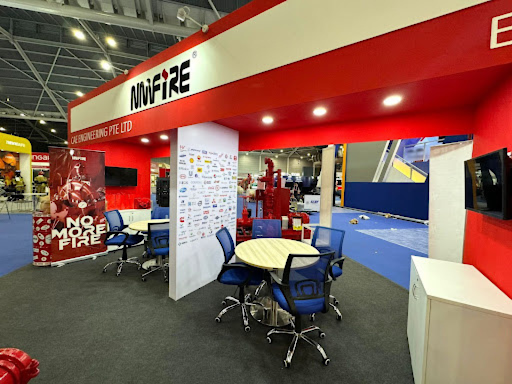
Human behaviour inside exhibitions follows predictable patterns. Understanding these patterns is essential for both layout and crowd management.
People Follow the Path of Least Resistance
Clear aisles and straight sightlines attract more visitors than narrow, winding routes. Short visual distances help people feel confident moving forward without hesitation.
Thresholds Slow People Down
Entrances, significant features, and changes in lighting or flooring naturally create pause points. These are excellent opportunities to position key messages, introductory showcases or hero experiences.
Crowding Reduces Engagement
Congested aisles shorten dwell time. When visitors feel squeezed or overwhelmed, they tend to skip booths, cut their journey short or move quickly through zones without engaging.
Dead Ends Are Avoided
Visitors generally avoid areas that feel like traps. Layouts that force backtracking or create long cul-de-sacs tend to attract low foot traffic.
The A–D–E–C Flow Model
A practical way to design visitor movement is to divide the route into four stages:
Attract: welcoming entrances, hero displays, signage cues
Distribute: early directional choices that nudge visitors left or right
Engage: balanced zones where people browse, interact and learn
Convert: meeting spaces, registration points or areas where decisions take place
This model is often used in exhibitions and is supported by research from museum and visitor-flow studies published in Frontiers in Psychology.
3. Planning the Macro Layout: Zoning, Circulation and Crowd Comfort
Macro planning shapes the exhibition’s high-level structure. This includes zoning, aisle widths, feature placement, and crowd density management.
Create Natural Zones
Exhibitions are easier to navigate when similar categories are grouped together. You can build industry clusters, national pavilions, or innovation corners. Position the most significant or most eye-catching features in areas that naturally draw visitors deeper into the hall.
Educational segments, such as talks or workshops, should also contribute to this journey rather than pull attention away. If you need inspiration for how physical structures drive movement and visibility, the exhibition booth design service page shows how layout elements guide behaviour.
Use Loop Circulation Instead of a Single Spine
Loop structures encourage exploration and reduce traffic pressure. They prevent dead zones and make it more likely that visitors will pass by every central area before leaving.
Plan for Comfortable Density
Crowd density is not just a fire-safety issue. It affects how visitors feel inside the space. Too much density causes stress. Too little makes the event feel empty.
Singapore’s Building and Construction Authority provides guidelines for safe movement and occupancy.
To design safe and comfortable densities, consider wider boulevards at peak routes, avoid placing stages near narrow aisles and plan waiting areas so queues do not block exhibitors.
Many organisers use heatmaps and app-based movement analytics to refine these decisions.
4. Wayfinding: Helping Visitors Navigate Without Thinking
People enjoy exhibitions more when navigation feels effortless. Wayfinding plays a significant role in shaping that experience.
Make Zones Easy to Recognise
Give each zone a distinct identity through colour, icons, or spatial cues. This helps visitors understand where they are even before reading a sign.
Use Clear Visual Hierarchy
Large typography should be used for halls and key routes. Smaller signage can guide visitors to amenities, meeting rooms, or stage areas. Keep your visual language consistent across printed maps, digital board,s and on-site structures.
Singapore’s Universal Design guidelines provide clarity on accessible signage and contrast, helping designers make exhibitions more accessible to all visitors.
Place Orientation Points at Logical Intersections
Hall entrances, major junctions, and food areas are ideal places for maps and directional prompts. Walking-time indicators are helpful for large venues. Multilingual signage is useful for events with significant international attendance.
5. Micro Layout: Designing Booths and Experiential Zones That People Remember
Micro layout turns the exhibition into a collection of memorable micro-experiences.
Build Zones That Support Different Purposes
A balanced exhibition often includes four types of experiential areas:
Discover: high-energy demonstrations and showcases
Learn: bite-sized talks or workshops
Connect: networking lounges or informal discussion areas
Decide: meeting pods or quiet corners for discussions
A closer look at how spatial design enhances visitor comfort can be found inside the commercial interior design section, which shows how interior layouts improve engagement and flow.
Design Booths With Visitor Psychology in Mind
- Open corners increase approachability.
- One clear headline at eye level is more effective than many messages.
- Keep more extended discussions inside the booth rather than near the aisles.
- Make calls to action visible from multiple angles.
Practical examples of how layouts influence engagement are also covered in the creative booth design inspiration blog article.
6. Using Data and Technology to Improve Each Edition
Technology helps organisers evaluate and evolve their exhibitions. Heatmaps, Wi-Fi analytics, queue tracking, and visitor surveys reveal whether zones were well balanced or needed adjustment.
Simulate and Iterate
Modern planning tools let you run circulation simulations before build-up. These can highlight bottlenecks or under-visited areas. Post-event data then guides improvements for the next edition.
Integrate Layout Planning Early With Production
Lighting, staging, AV, structural load, and entertainment timing all affect circulation. Working with an integrated team gives you better control over the end-to-end experience. To understand how production choices influence visitor engagement, review the live event production page, which showcases how staging and technical design guide attention and flow.
Conclusion
Event space planning in Singapore succeeds when the layout, circulation, booth experiences, and wayfinding all reinforce one another. When each component is intentional, the entire exhibition becomes easier to navigate and more engaging for visitors. Exhibitors benefit from stronger visibility, visitors enjoy a more comfortable journey, and organisers gain a smoother operation with fewer friction points.
If you want to apply these space-planning principles consistently across exhibitions, trade shows or branded environments, our team can help you shape layouts that feel intuitive, engaging and commercially effective. You can contact our team to discuss your upcoming event or request tailored recommendations for your floor plan.
FAQs About Event Space Planning Singapore
1. What does event space planning Singapore involve?
It involves designing hall layouts, booth clusters, circulation routes, wayfinding systems, crowd density planning and experiential zones to create a smooth and engaging visitor journey.
2. How early should planners start working on the layout?
Most medium to large exhibitions need nine to twelve months of planning to secure venue layouts, coordinate booth construction, manage safety requirements and test circulation patterns.
3. How can organisers improve visitor flow?
Simple changes such as wider aisles, clear sightlines, loop-based routing and strategic anchoring points can make the exhibition feel more intuitive.
4. What tools help with analysing visitor movement?
CAD modelling, 3D visualisation, Wi-Fi heatmaps, app-based movement tracking and queue analytics help planners understand behaviour and improve future layouts.
5. How can sustainability be integrated?
Reusable structures, modular builds, digital signage and efficient material planning reduce waste and make event production more environmentally conscious.