
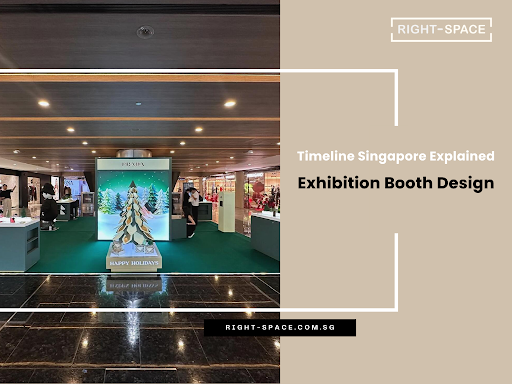
Exhibition Booth Design Timeline Singapore Explained
25 January 2026
Planning an exhibition booth design timeline Singapore brands can rely on is less about creativity and more about timing discipline. This blog will walk you through when to start, what must be locked by each stage, and how real trade show deadlines shape outcomes long before show week.
Why exhibition booth timelines fail in Singapore
Most exhibition delays in Singapore do not start on the show floor. They begin months earlier when design starts too late or decisions drift past lock dates.
Singapore exhibitions operate under fixed approval systems. Venue authorities, organisers, and contractors do not adjust schedules for late exhibitors, as outlined under Singapore Tourism Board MICE guidelines on event planning and compliance, which define submission, safety, and operational timelines across licensed venues.
Brands that miss early planning windows often pay more, accept compromises, or scale back ambition. Timelines are not advisory. They are commercial constraints.
What “starting early” actually means in practice

Starting early does not mean commissioning visuals far in advance. It means aligning design, fabrication, and approvals to non-negotiable milestones.
A realistic booth design lead time includes:
- Concept development
- Design lock dates
- Authority submissions
- Fabrication duration
- Installation sequencing
Each phase depends on the previous one closing properly.
This is why execution-led service models such as exhibition booth design services emphasise timeline control alongside creative development.
The real exhibition booth design timeline in Singapore
For major Singapore trade shows, timelines follow a predictable structure.
20–24 weeks before the show: strategy and scope definition
This is when brands decide:
- Booth size and configuration
- Custom build versus modular reuse
- Functional needs such as meeting rooms or product demos
Decisions made here determine feasibility later. Late changes at this stage ripple through the entire schedule.
16–18 weeks before the show: concept and spatial planning
Design work begins in earnest. At this point:
- Floor plans are defined
- Structural intent is established
- Budget alignment is confirmed
Designs remain flexible, but scope should not expand after this phase without consequences.
12–14 weeks before the show: design lock dates
This is the most underestimated milestone.
Design lock means:
- Layouts stop changing
- Structural elements are final
- Materials are confirmed
Design lock dates exist because fabrication cannot start on moving targets. Missing this window compresses everything downstream.
Approval windows are not suggestions
Singapore venues enforce formal approval processes.
Venue and organiser submissions
Most organisers require:
- Structural drawings
- Electrical layouts
- Fire-retardant declarations
Approval windows typically close 8–10 weeks before the show. Late submissions trigger resubmissions or forced simplifications.
Brands who start late often discover approval is the bottleneck, not fabrication.
Fabrication duration is fixed by physics
Once approved, fabrication begins.
Typical fabrication timelines
For custom booths:
- Simple builds: 4–6 weeks
- Complex or multi-level builds: 6–8 weeks
Fabrication duration depends on:
- Material availability
- Workshop capacity
- Build complexity
Fabrication cannot be rushed without increasing error risk. This is where controlled fabrication environments matter.
Design-led schedules that ignore fabrication realities usually collapse here.
Installation is the final immovable deadline
Installation windows in Singapore are short and strictly enforced.
What installation actually involves
Installation includes:
- Structural assembly
- Electrical and lighting integration
- Finishing and testing
- Final inspections
Move-in windows are often overnight. Missed slots incur penalties or forced downsizing.
Global exhibition operations data from the UFI Global Exhibition Industry operational timelines framework consistently shows that compressed installation periods are the highest-risk phase for exhibitors when planning overruns occur.
This is why installation ownership must be established early, not negotiated at the end.
How different trade shows affect timelines
Not all Singapore exhibitions behave the same way.
Large-scale international shows
Shows with international exhibitors enforce earlier deadlines. Approval windows close sooner to manage volume.
Industry-specific exhibitions
Trade shows involving machinery, medical equipment, or heavy displays require earlier engineering sign-offs.
Brands attending these shows should start planning closer to 24 weeks out, not later.
Common timeline mistakes brands still make
The same issues repeat across exhibitions.
- Treating design as a standalone task
- Assuming approvals are quick
- Believing fabrication can compress indefinitely
These assumptions fail under Singapore’s regulatory and operational environment.
Brands that plan realistically protect both budget and brand presentation.
How to decide when your brand should start
The right start point depends on execution risk.
Start earlier if
- The booth is custom-built
- Structural elements are involved
- Multiple stakeholders must approve content
Slightly shorter timelines work only if
- Modular systems are reused
- Scope is minimal
- All decisions are pre-aligned
Execution complexity dictates planning depth, not optimism.
Industry-facing references such as creative exhibition booth design ideas for 2025 often show concepts that assume early commitment. Those concepts fail when timelines are ignored.
Conclusion
Strong exhibition outcomes in Singapore are planned months before show week, not salvaged during installation. Brands that respect design lock dates, approval windows, and fabrication duration avoid rushed decisions and compromised builds.
If your exhibition presence carries revenue, partnership, or regional brand stakes, start planning early with a partner who understands real-world timelines and execution constraints. Reviewing how teams like Right-Space structure booth design, approvals, and build schedules helps brands assess feasibility early and commit with confidence, not urgency.
FAQs About Exhibition Booth Design Timeline Singapore
When should I start exhibition booth design in Singapore?
Most custom booths should start planning 20–24 weeks before the show, especially for major Singapore exhibitions with strict approval timelines.
What happens if I miss design lock dates?
Missed design lock dates compress fabrication and approvals, increasing cost and limiting build complexity.
Are approval windows the same for all venues?
No. Venues such as Marina Bay Sands Expo and Singapore EXPO apply different submission schedules, but all enforce firm deadlines.
Can fabrication be rushed if needed?
Fabrication duration is constrained by materials, workmanship, and safety checks. Rushing increases risk and cost.
Does booth size affect the timeline?
Yes. Larger or multi-level booths require earlier engineering and approvals, extending lead time.