

Exhibition Booth Singapore EXPO: 2026 Venue Rules
16 June 2026
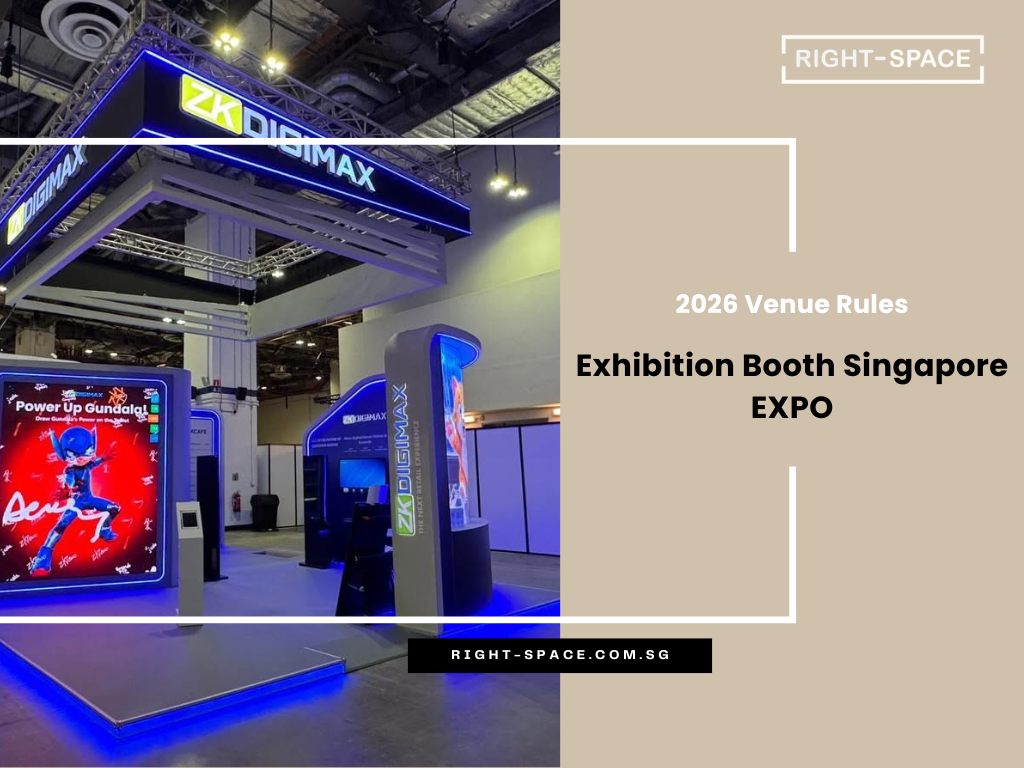
Singapore’s H2 2026 show calendar fills fast across Suntec, Sands Expo, and Singapore EXPO, and each hall enforces its own build rules. An exhibition booth at Singapore EXPO follows different ceiling, floor-loading, and access limits than the same stand at Marina Bay Sands. This blog walks you through the venue-by-venue rules that decide whether your design gets approved and built on time. Our exhibition booth design and build overview frames the rest.
Why do exhibition booth rules change from venue to venue in Singapore?
Booth rules change because the three main venues are built differently. Singapore EXPO runs ten column-free halls of about 10,000 square metres each, all at ground level, with ceiling clearance up to 16 metres, according to its operator Constellar. Sands Expo & Convention Centre sits inside the Marina Bay Sands integrated resort, so its exhibition halls are stacked across basement levels and reached through loading docks and freight lifts. Suntec’s exhibition space sits on Level 4, above retail and other floors, which is why floor loading and column positions matter there in a way they rarely do at EXPO.
That structural difference drives everything downstream: how tall you can build, how heavy your floor can get, how you bring material in, and what you are allowed to hang. Treat the venue as a fixed input, not a detail to solve later. A design approved on aesthetics alone, with no venue check, is the single most common reason a build slips on opening morning.
What are the build rules for an exhibition booth at Singapore EXPO?
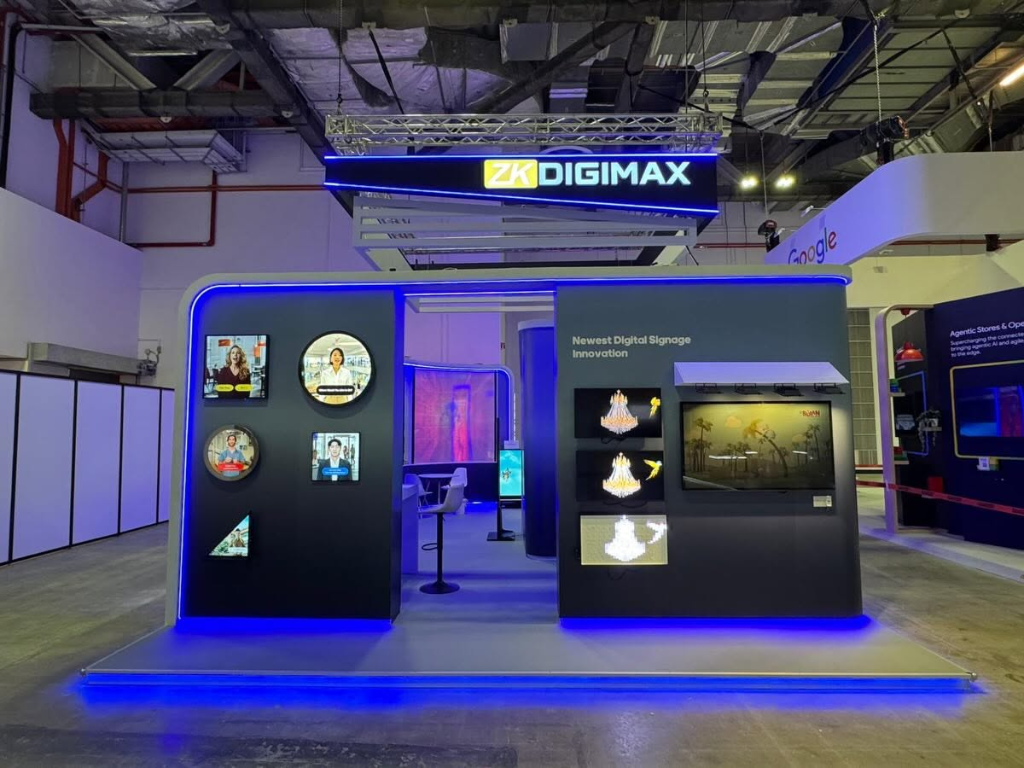
Singapore EXPO is the most forgiving of the three for ambitious builds. Ground-level, column-free halls and clearance up to 16 metres mean tall feature walls, hanging structures, and two-storey stands are physically possible without fighting the building. Vehicles move in directly through hall doors off Expo Drive, which removes the freight-lift bottleneck you hit at resort-style venues.
The trade-off is scale discipline. Because halls are large and shared, the organiser controls aisle widths, build height bands, and rigging access through the exhibitor manual, and those vary by hall and by show. Floor loading is published per hall in the venue technical guide, so confirm the figure for your specific hall rather than assuming a number from a previous event. In practice, EXPO suits brands running heavy product, raised platforms, or double-deckers, provided drawings reach the organiser early. The cleaner approach is to lock hall, height band, and rigging needs before fabrication, not after.
How do Sands Expo (Marina Bay Sands) booth rules differ from Singapore EXPO?
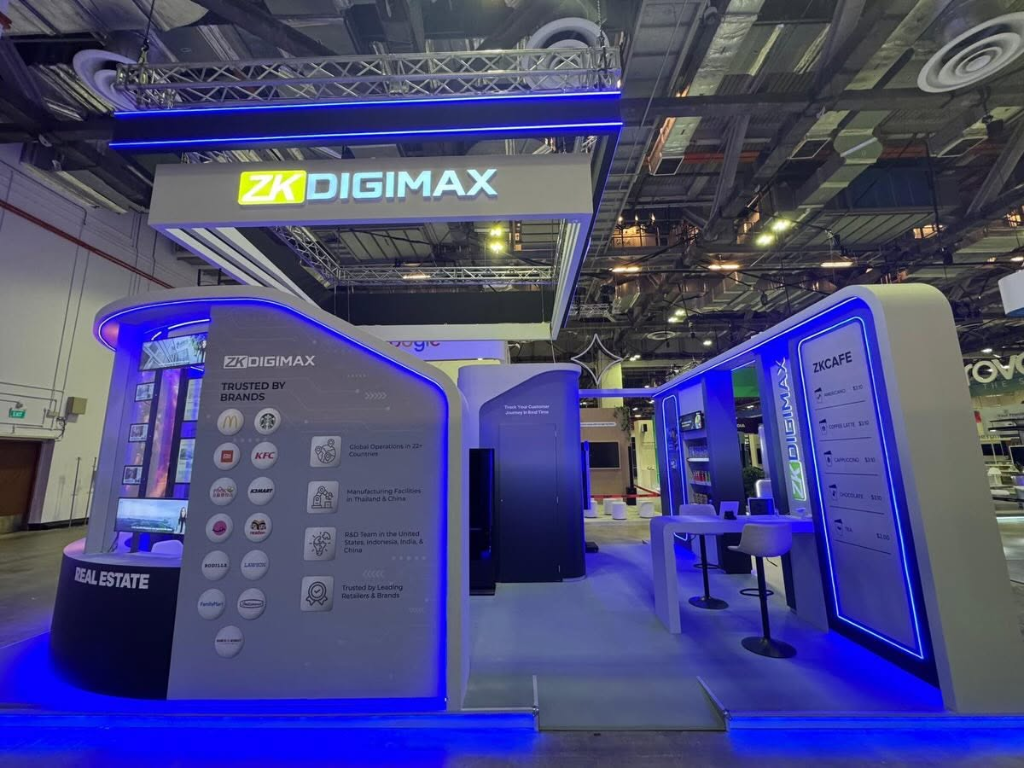
The headline difference is access, not creativity. Sands Expo halls are reached through loading docks and freight lifts rather than a ground-level drive-in, so your largest single component is capped by lift dimensions, not by the hall door. Marina Bay Sands publishes hall floor areas in its official floor plans, with individual exhibition halls running into the tens of thousands of square metres, yet a 6-metre feature wall that cannot fit the freight lift is still unbuildable as one piece.
This is where modular planning earns its place. A stand designed in transportable sections, with repeatable connection hardware, moves through lifts and assembles on site without losing finish quality. Rigging at Sands Expo typically runs through the venue’s house rigging team to defined load points, so overhead elements need confirmation before you commit to them in the design. Where this breaks down is late modularisation: splitting a one-piece wall during build week changes seams and finishing, and the compromise shows.
What are Suntec’s exhibition booth restrictions?
Suntec’s main constraint is weight, because its exhibition halls sit on Level 4 above other floors. Suntec publishes roughly 12,000 square metres of flexible space on Level 4, served by eight heavy-duty loading bays, which tells you the venue is engineered for serious move-in but also that floor loading is a managed limit rather than an afterthought. Heavy machinery, dense product walls, and large water features need load checks against the published hall figure before they are designed in.
Column positions also shape Suntec layouts more than they shape EXPO layouts, since the hall is part of a multi-storey structure. Worth noting: the eight heavy-duty bays make Suntec strong for fast, dense move-in across multiple stands, which is why it hosts large association shows. The honest read is that Suntec rewards tight logistics planning. Confirm bay slots, lift routes, and floor-load tolerance against the organiser’s hall plan, then design the stand to fit those numbers.
What ceiling height and rigging point limits apply across these venues?
Ceiling and rigging limits are venue-specific and organiser-gated, so the design height you can promise a client depends on the hall. Singapore EXPO offers the most headroom at up to 16 metres of clearance, which supports tall hanging banners and elevated structures where the show permits them. Sands Expo and Suntec clearances are lower and governed by each venue’s technical guidelines, and overhead loads at both typically route through house rigging to approved points rather than ad-hoc fixings.
Three rules hold across all three venues. Rigging must attach only to designated load points, never to services or to the structure at will. Suspended weight needs sign-off, often with a rigging plan submitted in advance. And nothing gets hung without the organiser’s written approval in the exhibitor manual. Design overhead elements as a request to be confirmed, not a given. A hanging sign that the organiser rejects two days before move-in is a redesign, not a tweak.
Are double-decker (two-storey) booths allowed, and what approval do they need?
Double-decker stands are allowed at all three venues in principle, but they are the most heavily gated build you can attempt. A two-storey stand needs organiser approval plus structural drawings and load calculations endorsed by a Professional Engineer registered with the Professional Engineers Board. For larger temporary structures, the work can fall under BCA’s permit to erect a temporary building, which formalises the engineering oversight.
Venue fit then decides feasibility. Singapore EXPO’s column-free, ground-level halls and 16-metre clearance make double-deckers comparatively straightforward to install. At Suntec, the Level 4 floor-loading limit can cap how heavy a two-storey stand may be, and at Sands Expo, freight-lift access caps the size of the sections you can carry up. We have built two-storey stands across all three; you can see recent booth projects for context. The deadline that matters most is the PE submission date, which usually falls weeks before move-in.
What are the build-up (bump-in) and tear-down hours at each venue?
Build-up and tear-down run on fixed, organiser-issued windows, and they are short. A typical Singapore show gives one to three build-up days before opening and a tear-down that often starts the moment the show closes, sometimes overnight. Miss your slot and you lose hours you cannot recover, because the next contractor is already booked into the dock behind you.
This is why bump-in is a scheduling problem before it is a building problem. Electrical termination must be done by a Licensed Electrical Worker, AV and graphics follow structural assembly, and a site supervisor holds the sequence together. A dedicated supervisor in Singapore runs roughly SGD 450 to SGD 800 a day in our experience, and pays for itself in saved overtime on the first build. Our turnkey build and install scope sets out how that sequence is held under one contract. Treat the bump-in schedule as the spine of the project.
How does loading bay and marshalling yard access work at each venue?
Loading access is time-gated at every venue, and the rules differ by building type. Singapore EXPO allows direct vehicle move-in through hall doors at ground level, which is the simplest route for heavy or oversized material. Sands Expo and Suntec route move-in through loading docks and lifts, so trucks queue against booked dock slots and a marshalling sequence rather than driving onto the floor.
That sequence is where builds quietly fail. Dock congestion during peak build periods is real, access passes take time to issue, and a lift payload limit can strand a component that looked fine on paper. A build is only deliverable once the logistics answer is clear: which dock, which slot, which lift, and in what order. This is the same discipline that decides whether a design is buildable in the first place. Book dock and lift slots when you book the stand, not when you finish the drawings.
What fire safety and egress rules must the booth design satisfy?
Fire safety is governed by SCDF, and it applies to materials, layout, and enclosed elements alike. Booth materials should carry recognised fire-retardant certification such as EN 13501-1 Class B, NFPA 701, or BS 5867 Part 2, with documentary evidence rather than a verbal assurance from a supplier. Aisle and gangway widths must stay clear for egress, and enclosed or two-storey elements draw closer scrutiny.
Some temporary exhibition setups can also require approval under SCDF’s Temporary Change of Use guidance, depending on the use case. The cost of getting this wrong is not paperwork; it is a fabricated element that has to be stripped out after it is built. Our deeper guide to SCDF and structural compliance covers the rules exhibitors most often miss. Specify certified materials at the design stage, because a non-compliant print or panel cannot be made compliant after production.
Who approves the booth design and what does the exhibitor manual require?
The show organiser approves your booth, working from the venue’s technical rules, and the exhibitor manual is the document that governs the whole build. It sets your hall, stand dimensions, build height band, rigging rules, material requirements, and submission deadlines. Approval usually requires dimensioned drawings, a stand layout against the hall plan, method statements, risk assessments, and, for raised or two-storey stands, PE-endorsed structural calculations.
Two practical points decide whether approval is smooth. First, always work from the hall-specific manual for your show, never from a previous event in a different hall, because ceiling, floor load, and aisle rules differ between halls. Second, the same documentation standards that win exhibition tenders also clear organiser approval faster, which is why our guide to tender and documentation standards is worth reading alongside this one. Submit a complete package once, rather than a partial one that triggers a round of RFIs you do not have time for.
How should H2 2026 exhibitors plan around peak season?
Plan backwards from the organiser’s submission deadline, not forwards from your design idea. Singapore’s H2 window concentrates major shows across Suntec, Sands Expo, and Singapore EXPO, which compresses fabrication slots, dock availability, and PE review time across the whole vendor pool at once. The booths that go up cleanly are the ones whose drawings, structural endorsements, and dock bookings were locked while everyone else was still moodboarding.
A workable sequence for H2 2026: confirm hall and exhibitor manual first, then fix height band and rigging needs, then complete drawings and any PE endorsement, then book fabrication and dock slots, then schedule LEW and AV against the bump-in window. Right-Space typically handles exhibition booths from SGD 8,000 upward, with scope set after the venue requirements are clear. The single biggest H2 risk is starting fabrication before approval; it forces rework at the worst possible moment.
To scope a hall-specific build for an H2 2026 show, scope your H2 2026 build with the Right-Space team before fabrication starts.
Conclusion
Venue choice is a design constraint, not a backdrop. The same stand behaves differently at Singapore EXPO, Sands Expo, and Suntec because ceiling clearance, floor loading, access route, and rigging rules are set by the building and enforced by the organiser. Read those numbers first, design to them, and submit early.
Planning an H2 2026 show? Ask Right-Space for a hall-specific build review before you commit budget, so your design clears organiser approval and goes up on schedule rather than getting reworked on the floor.
FAQ About Exhibition Booth Singapore Expo
Do I need a Professional Engineer for my booth at Singapore EXPO?
You need a Professional Engineer when your booth is a double-decker, has a raised platform, or carries significant suspended load. The PE, registered with the Professional Engineers Board, endorses structural drawings and load calculations for organiser and venue approval. Standard single-storey stands at Singapore EXPO usually do not require PE endorsement.
What is the maximum booth height at Sands Expo?
here is no single fixed figure; maximum height at Sands Expo is set by the organiser in the exhibitor manual and capped in practice by freight-lift dimensions and venue clearance, which are lower than Singapore EXPO’s 16 metres. Always confirm the build height band for your specific hall and show before designing.
Can I hang a banner or rig from the ceiling at Suntec?
Yes, but only through the venue’s house rigging to approved load points, and only with organiser approval recorded in the exhibitor manual. Submit a rigging plan in advance. Because Suntec’s halls sit on Level 4, both suspended loads and floor loads are managed limits, not open allowances.
How early must I submit booth drawings for organiser approval?
Submit as early as the exhibitor manual allows, and treat the PE-endorsement deadline as the hard date, since it usually falls several weeks before move-in. For H2 2026’s peak shows, earlier is safer because fabrication slots, dock bookings, and PE review capacity all tighten at once across Singapore.
Related Insights
Browse our latest articles on event management, exhibition design, and brand activation in Singapore.
View All Insights