
Exhibition Display Board Design: Creative Trade Show Concepts
30 November 2025
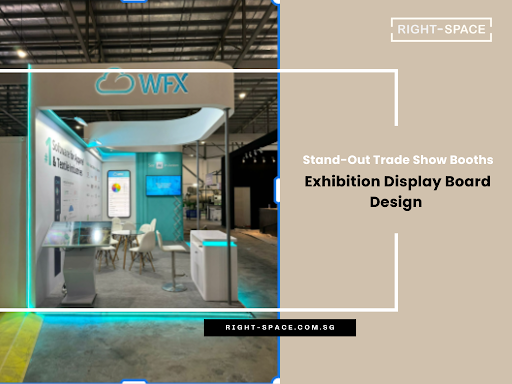
Exhibition display board design is the backbone of a high-performing trade show presence — it controls what people see first, where their eyes travel, and what they remember.
This blog will walk you through creative trade show concepts, award-winning displays, and practical design tactics you can apply to your next exhibit.
If you’re planning your first or next booth, start by reviewing our Exhibition Booth Design Services in Singapore to understand how storytelling and structure can merge to drive visitor engagement.
1. Why Creative Booths (and Boards) Matter
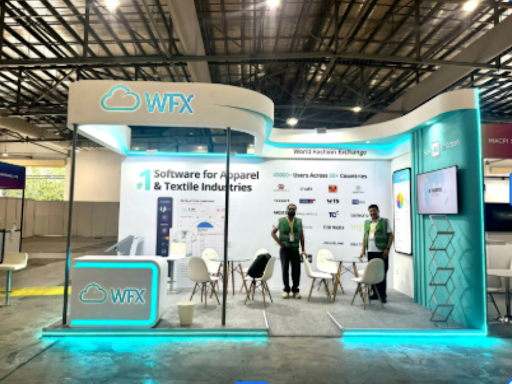
Trade shows are one of the few places where you can meet a high volume of decision-makers face to face. Research from the Centre for Exhibition Industry Research (CEIR) shows that roughly 81% of exhibition attendees have buying authority, which makes the show floor one of the highest-value B2B environments you can invest in.
The problem? Everyone else knows that, too.
Most halls are packed with similar pop-up stands and generic fabric backwalls. When your booth and exhibition display board design look like everyone else’s, you’re effectively invisible. Creative booths solve that by:
- Stopping people in their tracks
- Making your brand easier to recall after the show
- Increasing dwell time and lead capture compared to static displays
Interactive technology amplifies this effect. One study found that over half (53%) of consumers are more likely to buy from brands that use virtual reality than from those that don’t.
So your challenge isn’t just “having a booth”. It’s designing boards, panels, and visual surfaces that carry a story, invite interaction, and convert attention into pipeline.
2. Key Principles Behind Award-Winning Booth & Display Board Design
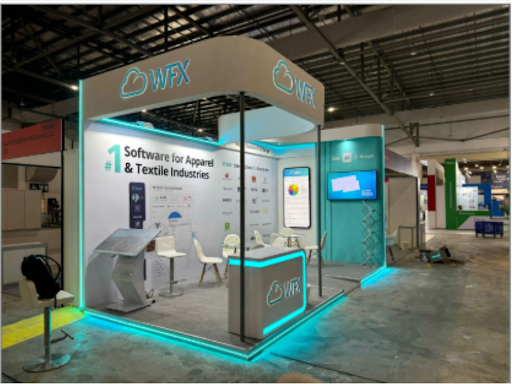
2.1 Make a Strong First Impression
Visitors typically decide in a few seconds whether to step in or walk past. A strong display board works like a billboard:
- A clear promise or benefit (“Cut your maintenance time by 40%”)
- One powerful visual or product hero
- Supporting icons or stats—not paragraphs of copy
Exhibit specialists consistently note that booths that make an immediate visual statement drive higher recognition and better conversation rates than cluttered, text-heavy stands.
2.2 Tell a Story Through Layout and Boards
Award-winning exhibits rarely scatter random graphics. They build a narrative arc:
- Hero panel – what you stand for
- Problem/insight panel – the pain you solve
- Solution & proof panel – how you fix it, with evidence
- Action panel – how to talk, book, scan, or try
Event design experts highlight that this kind of storytelling layout helps visitors “get” your value proposition in seconds, rather than forcing them to decode multiple messages.
Your exhibition display board design should guide the eye in that order, using hierarchy, arrows, or numbered sections.
2.3 Prefer Interactive Experiences to Static Displays
Modern attendees expect to experience your brand, not just read about it.
Interactive concepts that consistently generate buzz include:
- Touchscreen demos and product configurators
- VR/AR experiences showing environments that won’t fit in the hall
- Live dashboards visualising real-time data, performance, or savings
Interactive tech like VR can increase engagement time and leads compared to traditional displays, with some studies reporting double-digit lifts in attention and lead generation when VR is integrated into booth design.
Design your boards to frame these experiences: use branding panels that explain the challenge, highlight what to look for in the demo, and offer a follow-up action.
2.4 Think Modular and Scalable
Most brands exhibit at more than one show. That’s where modular display panels and portable exhibition boards are worth their weight in gold.
Companies like Highmark TechSystems and other modular specialists provide systems (e.g., multi-level ExpoDeck structures and modular wall systems) that can be reconfigured from a small inline booth into a larger island layout while keeping the same core components and branding.
For your design strategy, that means:
- Building graphics in repeatable modules (e.g., 1 m or 2 m boards)
- Keeping key messaging in central “hero” panels that can move between shows
- Designing infill panels that can be swapped depending on show theme or audience
2.5 Use Color Strategically
Colour is one of the fastest ways to stand out in a crowded aisle.
Hospitality and events platform Social Tables highlights concepts like:
- Indoor jungle – green foliage + neutral boards for a calming oasis
- Black-and-white booth – monochrome walls with a full-colour logo for emphasis
For exhibition display board design, use colour to:
- Establish hierarchy (e.g., one brand colour reserved for CTAs)
- Create contrast with the aisle (if most booths are dark, go light, and vice versa)
- Maintain cohesion across backwalls, side panels, and hanging signs
Avoid using every colour from your palette on one wall. Choose one dominant colour, one accent, and plenty of negative space.
2.6 Plan Well Before the Show
According to trade-show marketing specialists, pre-show campaigns can make or break booth traffic.
Planning ahead means:
- Designing boards early enough to feature in teaser emails and social posts
- Building a landing page with your booth number and a render of your display
- Coordinating with AV, print, flooring, and logistics partners so nothing breaks on site
Think of your display boards as part of a campaign, not just hardware. Use them in your digital promos, then bring that visual language to life at the show.
3. Creative Booth Concepts and Interactive Ideas (Grounded in Real Examples)
Here are practical concepts—validated by real event case studies—that you can plug into your next trade show booth design.
3.1 Immersive Technology Zones
Event-marketing blogs and tech providers consistently report uplift in booth traffic when VR or AR is used to demonstrate products that are complex, large-scale, or intangible.
Examples of effective VR/AR concepts include:
- “Walk the Plant” – a factory or site tour in VR
- “Before vs After” overlays – AR visuals that show upgrades or savings
- Immersive destination domes – tourism boards transporting visitors into landscapes
Your boards should:
- Explain the experience in 1–2 lines (“Step into our VR lab to see how we cut downtime by 30%”)
- Use clear signage layout to show queue entry and exit
- Include a simple QR code to claim follow-up content after the demo
3.2 Gamified Engagement and AI Challenges
Gamification keeps people at your booth longer and generates opt-in data.
Popular formats include:
- Tablet trivia games (e.g., “Jeopardy”-style quizzes about your industry)
- AI vs. human challenges (“Can you beat our AI at forecasting?”)
- Mini-drone racing lanes for tech brands
Event agencies report that these experiences can significantly extend dwell time and create buzz across the hall when promoted on social media screens and display boards.
Design your boards to show:
- How to participate
- What’s at stake (prizes or bragging rights)
- How results link back to your product (“The AI that beat you is what powers our optimisation engine.”)
3.3 Social Media Vending Machines & Reward Walls
Some exhibitors now use social vending machines or digital reward walls: attendees post with a hashtag, then redeem instant rewards.
This type of activation:
- Amplifies your reach beyond the hall
- Gives people a concrete reason to share your booth visuals
- Creates a “moment” in front of your branding panels
Your display board design should feature:
- The event hashtag and your brand handle in large type
- Simple step-by-step visuals (1. Post, 2. Tag, 3. Redeem)
- A photo-friendly backwall for people to pose in front of
3.4 Small Booth Concepts That Punch Above Their Weight
Social Tables’ 7 “winning” trade-show ideas are beneficial for 10×10 or 3×3 spaces:
- Indoor Jungle – Green plants + warm wood panels + minimal copy
- Black & White – Monochrome boards with a full-colour logo as a focal point
- Shadow Puppet – Cut-outs and spotlights casting intriguing shadows
- Building Blocks – Jenga-style blocks with values or themes written on them
- Curiosity Booth – Hidden compartments, switches, or “mystery boxes”
- Home Sweet Home – Living-room lounge with familiar amenities
- Mural Wall – A collaborative art wall where attendees draw or write messages
All of these rely heavily on display board design:
- Large backwall graphics to set the scene
- Side panels to frame interaction zones
- Mural or writable boards for collaboration
4. Case Studies: Award-Winning Displays from 2024
Awards are a useful proxy for what juries—and attendees—consider exceptional.
4.1 Best Backlit Display – Enbridge (Hydrogen Convention 2024)
PosterGarden highlighted Enbridge’s 20×20 modular booth at the 2024 Hydrogen Convention as “Best Backlit Display”. The stand used illuminated panels in the brand’s signature yellow to project a futuristic, clean-energy story.
Board design takeaway
Backlit branding panels + crisp iconography + restrained copy can make your sustainability message feel both premium and approachable.
4.2 Best Modular Display – GDI Ainsworth / MobilTex
GDI Ainsworth’s award-winning display was recognised for its flexibility—it could function as a 20×20 island or break down into smaller footprints while preserving visual impact. MobilTex’s open-concept modular stand earned runner-up recognition for branding visibility and interaction zones.
Board design takeaway
Design your artwork so graphics still make sense when re-combined in different configurations. Avoid giant images that only work in a single exact layout.
4.3 Best Hybrid & Digital Media – Tentacle Kitty & Travel Alberta
- Tentacle Kitty (Comic-Con) turned its booth into a narrative-driven “adoption centre”, integrating shelving, character panels, and playful copy—the very definition of display boards working as story pages.
- Travel Alberta used a massive PanoLED video wall to immerse visitors in cinematic landscapes at RVC 2024, winning Best Digital Media Display.
Board design takeaway
Hybrid displays pair static boards (for clarity and wayfinding) with dynamic screens (for emotion and motion). Both must share the same visual language.
4.4 Best Portable & Affordable – Kananaskis Pomeroy Hotel & Olympic City
PosterGarden also recognised:
- Kananaskis Pomeroy Hotel for a portable “Rocky Mountain getaway” setup, complete with high-res scenic graphics and rustic props.
- Olympic City for creating an elegant 10×20 backwall using just three pop-up Xtension displays, keeping total costs under US$5k.
Board design takeaway
You don’t need custom architecture to look premium. Smart portable exhibition boards, good photography, and a focused concept can be enough to win awards.
5. Pre-Show Promotion and On-Site Engagement
A strong exhibition display board design works even harder when people already know to look for it.
Specialist agencies emphasise:
- Start early. Promote your booth 6–12 weeks out on LinkedIn, email, and your website.
- Share visuals. Use mockups or renders of your boards in campaign creatives so they’re instantly recognisable on show day.
- Invite existing customers. Personally invite key clients or prospects to visit your stand or attend a mini-session.
- Think vertical. Use tall signage or overhead elements so people can spot your branding over the crowd.
On-site, make sure your boards:
- Repeat the same messaging used in pre-show marketing
- Clearly display your booth number (for people following floor plans on their phones)
- Highlight schedule blocks (live demos, talks, giveaways) in a clean timetable layout
6. Enhancing Attendee Experience Through Smart Board Design
6.1 Comfort & Hospitality
Creating a “home sweet home” zone—soft seating, warm lighting, charging points—has been shown to increase dwell time and conversation quality at hospitality-driven booths.
Your boards can reinforce that by:
- Labeling zones clearly (“Relax & Recharge”, “Meet the Team”, “Book a Demo”)
- Using soft photography and warm colours around seating areas
6.2 Gamification, Curiosity, and Collaboration
Concepts like building-block games, curiosity boxes, and mural walls encourage active participation.
Align your display boards with these elements by:
- Providing prompts (“Add one word that describes your 2025 goals”)
- Framing the mural or game with brand messaging
- Using icons to guide shy visitors into low-pressure participation
6.3 Tech That Serves the Story
LED walls, AR overlays, and large touchscreens should enhance—not replace—good visual communication.
Pair digital elements with:
- Static signage layouts summarising key messages for people who don’t stop
- QR codes leading to deeper product pages or videos
- Clear wayfinding graphics to avoid congestion
6.4 Accessibility, Inclusivity, and Measurement
High-performing exhibits are easy for everyone to navigate:
- Keep aisles wide enough for wheelchairs
- Mount key display boards at eye-level for standing and seated visitors
- Use high-contrast type for legibility.
Finally, measure what matters:
- Badge scans and lead volume
- Average dwell time in key zones
- QR code scans from specific panels
- Social mentions of your booth visuals
Post-show, review which boards or panels actually drove interaction—and iterate for the next event.
Conclusion
Creative trade show concepts only truly land when they’re anchored in clever exhibition display board design. The most successful booths blend straightforward storytelling, strategic colour and hierarchy, modular structures, and interactive experiences that give visitors a reason to stop, stay, and share. From Enbridge’s backlit sustainability story to Tentacle Kitty’s narrative retail space and Travel Alberta’s immersive LED pavilion, award-winning displays prove that great design is a business tool, not just decoration.
If you treat every board, panel, and surface as a purposeful touchpoint in your lead-generation journey—and pair it with thoughtful pre-show marketing and on-site hospitality—you’ll turn your next trade show from “just another booth” into a branded experience people remember and talk about long after the hall lights go down.
For full-service support that brings these principles to life, learn more about our Exhibition Booth Design Services.
FAQs About Exhibition Display Board Design
What is the most important rule in exhibition display board design?
The most important rule is clarity at a distance. Your main display board should communicate who you are and what problem you solve within 3–5 seconds, using a strong headline, a single visual, and clean signage layout. Studies on trade show signage show that concise, high-contrast messaging outperforms complex, text-heavy boards for engagement.
How can I make a small booth look premium with limited budget?
Focus on one strong idea and invest in portable exhibition boards with high-quality printing. Concepts like an indoor jungle, black-and-white minimalism, or a collaborative mural wall can dramatically elevate a 10×10 footprint without custom architecture.
Are modular display panels really worth it for trade show booth design?
Yes. Modular display panels and systems let you reconfigure layouts for different shows, reuse branding panels, and scale between inline and island spaces. Providers like Highmark TechSystems design modular structures that can be adapted to many floorplans, saving long-term cost and maintaining visual consistency.
What interactive elements work best with branding panels?
VR demos, touchscreen configurators, trivia games, and AI challenges work particularly well when framed by clear branding panels that explain the benefit of participating. Research shows immersive and interactive experiences drive higher engagement and purchase intent compared to static displays alone.
How do I know if my exhibition display boards are performing?
Define KPIs before the show: scans per hour, dwell time near key panels, QR code clicks, and social media mentions of your booth. After the event, compare