

Exhibition Stand Design Singapore: H2 Build Playbook
18 May 2026
H2 shows in Singapore compress every stage of exhibition stand design Singapore into roughly twelve weeks of brief, design, fabrication, and onsite delivery. This blog will walk you through how brands run a tight briefing process, secure a clean design approval cycle, and reach stand fabrication readiness before bump-in begins at Suntec, Sands Expo, or Singapore EXPO. Our team handles exhibition booth design and fabrication across these venues, and the patterns below come from that calendar.
Why H2 Compresses Exhibition Stand Design Timelines in Singapore
Singapore’s second-half calendar is denser than the first. ITB Asia, TravelRevive, SWITCH, FIND Design Fair Asia, SIEW, and a string of association conferences cluster between September and early November. The F1 Singapore Grand Prix in late September pulls hotel inventory and transport bandwidth at exactly the moment most exhibitor manuals are due back to organizers. Suntec, Sands Expo, and Singapore EXPO all run overlapping move-in days during this window, which means contractors get pulled across three venues in the same week.
This compression has practical consequences. Stands designed in August get fabricated in September while the team is also installing for a different show. Lead times for printed graphics, custom carpentry, and AV rentals stretch by 30 to 50 percent compared to a quiet H1 quarter. Last-minute changes that would cost a brand nothing in March can cost 15 to 20 percent more in October because labour and material supply tightens at the same time.
A realistic H2 timeline looks like this: brief signed twelve weeks out, concept design locked at week eight, engineered drawings and structural calculations at week six, organizer submission at week five, fabrication weeks four to two, and bump-in within the final 72 hours. Any slip in the first half eats directly into onsite hours, where mistakes are the most expensive and the slowest to fix.
The Brief Phase: What a Stand Design Agency in Singapore Actually Needs
A strong stand starts with a brief that answers commercial questions before aesthetic ones. We push clients to write down a few things first: what visitor behaviour they want at the booth, what success looks like on day two when foot traffic peaks, and what objection their hero product is trying to dissolve. Without those, the design becomes decoration.
Commercial objectives and visitor behaviour
A demo-led brief produces a very different booth than a meeting-led brief. A pharmaceutical company at MEDLAB Asia who wants 40 scheduled private consultations needs enclosed meeting pods, double-deck capacity, and a controlled queue zone. A SaaS firm at SWITCH chasing 1,200 badge scans needs an open front, screen-driven attractor content, and a fast lead-capture flow. Brand managers who skip this stage usually end up with a beautiful stand that under-converts.
Booth dimensions, location, and neighbour context
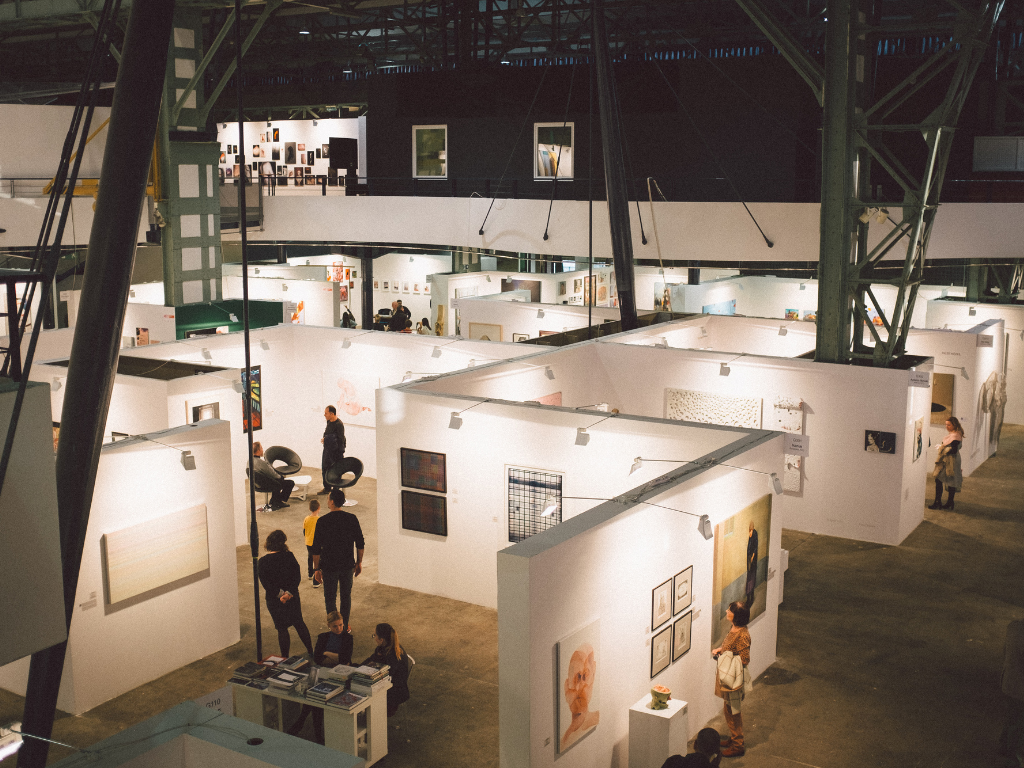
The floor plan matters more than people assume. A 6 by 9 metre island booth on a main aisle behaves differently from a 6 by 3 metre inline against a back wall, even at the same budget. We check sight lines from the entrance, neighbour height restrictions, and rigging eligibility before any 3D work begins. Suntec has rigging point limits and load ratings per ceiling grid that constrain hanging signage. Singapore EXPO halls have different clear-height profiles between Halls 1 to 6 and Halls 7 to 10, which changes what is structurally possible above the booth.
Brand assets, hero product, and content strategy
A booth is a content surface. We ask for final hero product photography, motion files, talking-head video, and any data wall content during the brief, not at fabrication. Brands that supply assets late force their exhibition stand contractor to print on standby paper or improvise on substrate choice, which is where colour drift and finish inconsistency creep in. For honest context on what each scope tier actually costs in this market, the real budget breakdown for exhibition booths in Singapore is worth reading before the brief is signed off.
From Concept to Approved 3D: The Design Approval Cycle
The design approval cycle is where most projects gain or lose two weeks. A clean cycle moves through three named gates, each with a named approver on the client side. Without named approvers, sign-off becomes a committee exercise and the calendar slips quietly.
First concept and the iteration window
We typically deliver two concept routes within five to seven working days of a signed brief. One leans into open theatre, the other into intimate consultation. Brands choose a direction, then we run one round of meaningful revisions. Two rounds is the practical ceiling before fabrication windows are at risk. We document each revision in writing so nothing relies on memory or a half-remembered WhatsApp message. For teams still shaping their spatial direction, our note on layout strategies that drive better booth traffic covers the decisions that change conversion at the floor level.
Engineering, rigging, and double-deck reality
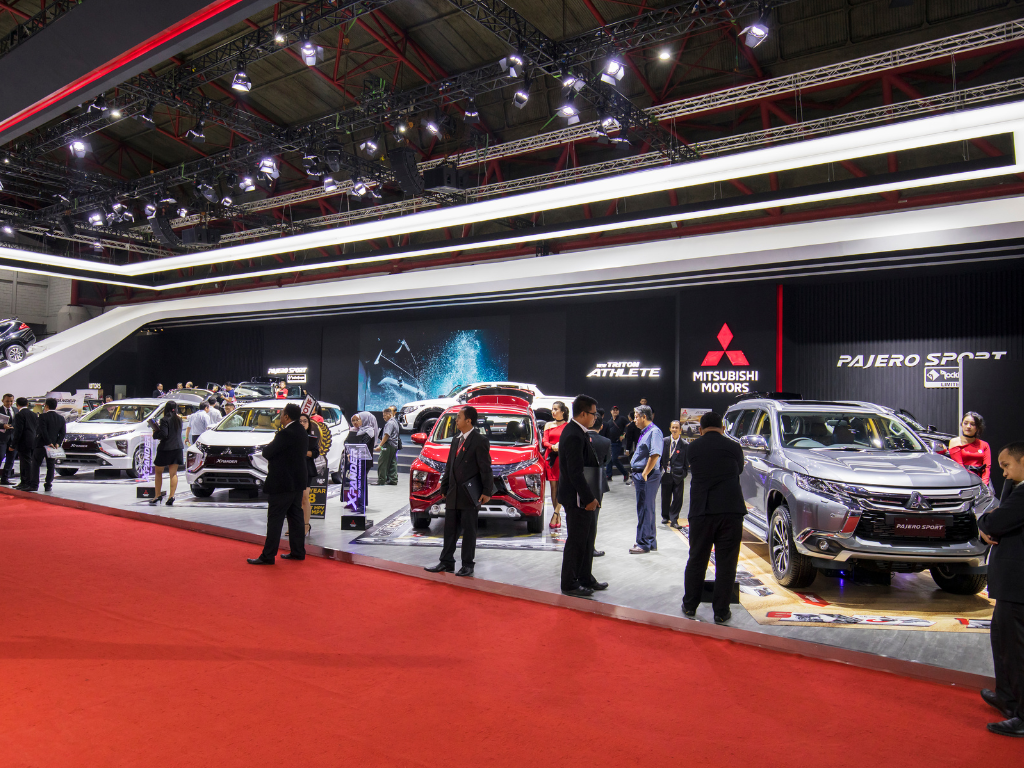
Once concept is approved, structural drawings go to a Professional Engineer for endorsement if the stand includes a double-deck, a hanging structure above 4 metres, or any cantilevered element with significant moment loading. This is not optional. Singapore venues require PE endorsement for these elements before they will accept the build. We see brands underestimate this every H2: a beautiful upper deck rendering becomes a problem when the PE asks for column relocations that change the entire ground-floor plan.
Sign-off, lock, and organizer submission
Final sign-off must include the locked 3D, the engineered drawings, and the booth layout dimensions matching the contracted shell. The submission package goes to the organizer roughly five weeks before the show. Late submissions can be rejected outright, or accepted with onsite restrictions that cost the brand visibility. For brands shaping their first bespoke build, the custom event booth patterns we see across Singapore exhibitors reflect what actually gets requested when budgets and timelines align.
Stand Fabrication Readiness and Singapore Venue Compliance
Stand fabrication readiness is a checklist, not a feeling. It means the build can start on day one of the fabrication window without waiting on missing approvals, missing graphics files, or unresolved structural questions.
Exhibitor manual compliance at MBS, Suntec, and Singapore EXPO
Every Singapore venue has an exhibitor manual with non-negotiable rules. Sands Expo at Marina Bay Sands enforces strict environmental, health, and safety standards including hot work permits, contractor accreditation, and specific aisle clearance rules. Suntec Singapore publishes rigging load limits, electrical capacity per booth, and waste removal protocols. Singapore EXPO, operated by Constellar, has its own bump-in window logic depending on hall and adjacent show schedules. A stand designed without reading the right manual usually fails its first compliance check, and the fix is rarely cheap.
WSH compliance, electrical work, and risk assessments
Singapore’s Workplace Safety and Health Act, administered by the Ministry of Manpower, applies to every contractor working on a booth. Risk assessments must be submitted before move-in, hot work needs permits, and any working at height above three metres requires fall protection. Electrical installation work follows SS 638:2018, which means licensed electrical workers must terminate the supply and certify the stand. Brands sometimes try to save by appointing unlicensed help. In Singapore, that is the fastest route to a build being stopped onsite.
Material choices and reuse logic
Material decisions made in design week show up six weeks later. Modular aluminium systems travel and reuse well, which suits brands running a Southeast Asia circuit through KLCC, BITEC, and JIExpo. Custom timber and acrylic carpentry delivers a higher visual finish but rarely survives a second show without refurbishment. We push clients to think in two or three show horizons, especially when the same hero asset will appear at multiple events in H2. The Building and Construction Authority’s public guidance for temporary structures feeds directly into how we specify load-bearing elements that need permits.
Build-Up, Show Days, and Stand Handover
Onsite is where every previous decision is tested. A well-prepared stand bumps in cleanly. A poorly-prepared one consumes overtime, money, and patience.
Bump-in windows and onsite supervision
A 6 by 9 metre custom build typically needs 36 to 48 hours of bump-in at Suntec or Sands Expo, longer if double-deck. We staff a site supervisor whose only job is to interface with the venue’s operations team, the appointed electrical contractor, and the rigging crew. The brand’s marketing lead should never be the person solving venue-side issues at 11pm the night before opening. Our portfolio of executed exhibition builds shows the bump-in scenarios we plan around at each venue.
Live show operations and contingency
During show days, things fail. Screens flicker, hostesses call in sick, hero product samples run out. A stand handover document, signed at the end of bump-in, lists every operating element, the backup, and the contact for fixing it. We keep one technician on rotation for shows longer than two days. Brands without this rotation discover the cost on day three, when something breaks and nobody onsite knows who to call.
Tear-down and post-show debrief
Tear-down at Singapore venues is brutal, usually a 12 to 18 hour window where the hall must be cleared completely. Material recovery for reuse only happens if it was planned at design stage. Within two weeks of the show, brands should receive a debrief covering scan data against target, what design elements drove conversion, and what to change for the next outing. Skipping this turns each show into a one-off rather than a learning loop.
Choosing the Right Exhibition Stand Contractor in Singapore for H2
Brands evaluating partners for H2 often confuse a stand design agency with a fabricator. The first does concept, engineering, and supervision. The second cuts, welds, and prints. A reliable Singapore operator does both under one roof, or has a tightly contracted relationship with a fabricator they trust. Splitting them across two vendors usually creates a finger-pointing problem when something goes wrong onsite, and something always does.
The questions that matter when selecting are simple. Has the contractor worked at the specific venue your show is at? Do they hold current WSH compliance and have licensed electrical workers on staff? Can they show three case studies from the last 18 months at comparable scope and budget? A deeper checklist for vetting an exhibition stand builder in Singapore covers the technical questions worth asking before signing a quote.
Conclusion
H2 in Singapore rewards brands who treat exhibition stand design as a structured project with named approvers, dated gates, and a contractor who reads the exhibitor manual before drawing anything. The brief sets up everything that follows. The approval cycle protects the calendar. Fabrication readiness protects the budget. Handover protects the next show.
If your team is planning a stand for ITB Asia, SWITCH, SIEW, or any other H2 show this year, get in touch with Right-Space to lock the brief and design window before the September squeeze tightens around the entire industry.
FAQs About Exhibition Stand Design Singapore
What is the typical lead time for exhibition stand design in Singapore for H2 shows?
Twelve weeks is a healthy window for a custom build at Suntec, Sands Expo, or Singapore EXPO. That covers briefing, two design rounds, PE endorsement, organizer submission, and fabrication. Anything under eight weeks pushes brands into modular or system stands rather than fully bespoke work.
How much does a custom exhibition stand cost in Singapore?
Custom stands in Singapore generally run from SGD 800 to SGD 2,000 per square metre, depending on materials, technology, double-deck requirements, and whether the design will be reused. A 6 by 9 metre island booth at premium finish typically lands between SGD 70,000 and SGD 120,000 inclusive of fabrication and onsite supervision.
Do I need a Professional Engineer endorsement for my booth in Singapore?
Yes, if the stand has a double-deck, a hanging structure, or any cantilever above standard limits. The PE endorsement is required by venue management at Suntec, Sands Expo, and Singapore EXPO before fabrication is permitted onsite. Your stand design agency should handle this as part of the standard scope, not as an extra.
Can a stand design agency in Singapore also handle bump-in supervision?
A full-service exhibition stand contractor in Singapore handles design, fabrication, and onsite supervision under one roof. This matters because the supervisor needs to read the original engineered drawings and resolve venue-side issues without relaying questions back to a separate design team. Split-vendor setups usually slow down onsite problem solving.
What happens if my booth fails compliance during bump-in?
Venue operations can stop the build until the issue is resolved. Common failures are missing electrical certificates, aisle encroachment, exceeding rigging load limits, or unapproved hot work. Catching these at the exhibitor manual review stage four to five weeks before the show is far cheaper than fixing them at 9pm on bump-in night.
Related Insights
Browse our latest articles on event management, exhibition design, and brand activation in Singapore.
View All Insights