
7 Award-Winning Exhibition Booth Designs in Southeast Asia
28 November 2025
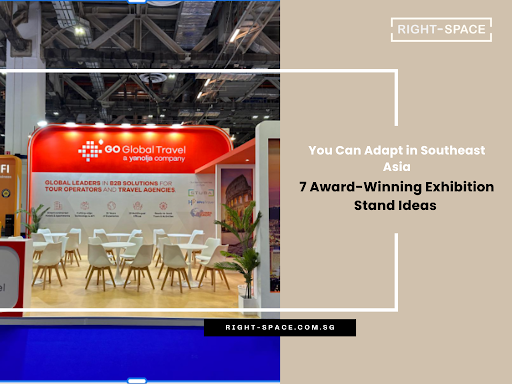
What makes for dazzling exhibition stand ideas? In Southeast Asia, award-winning booths are proof that brands are using the power of storytelling, sustainability, and cultural design to create truly unforgettable trade-show experiences.
This guide will take you on a tour of the region’s best exhibition stand ideas – and show you how you can adapt these ideas to leave a lasting impression at your next trade show.
1. L’Oréal Singapore – Scents and Sensibility (TFWA Asia Pacific, Hong Kong)
Award-winning stand: Edge Award, Exhibit Design Awards 2024
Best for: Creating an immersive experience that combines multi-sensory storytelling and sustainability, perfect for luxury beauty brands
Key players: L’Oréal Singapore, TFWA, Exhibit Design Awards, bamboo, UV technology
L’Oréal Singapore’s “Scents and Sensibility” stand is a standout example of how to create an emotional, multi-sensory exhibition experience. The booth’s design was inspired by research that shows post-pandemic travellers are looking for calm, authenticity and immersive sensory experiences.
What made it a winner
A zen-inspired open lounge: A sheer fabric canopy cast a dreamy light, while bamboo-clad cabinets with a rustic texture felt like a stroll through a Japanese garden.
Sustainable materials: The fragrance bar and display table used discarded steel – a clever way to show off the brand’s commitment to circularity.
Fragrance theatre: Visitors got to interact with UV-revealed scent menus and cocktails topped with smoke bubbles – a high-tech, yet emotional experience.
Why it does it so well
This stand is a masterclass in creating a multi-sensory brand experience, blending fragrance, texture, sound, and sustainable materials to create a unified experience. If you’re looking for trade show inspiration this is a benchmark for experiential retail.
2. American Hardwood Export Council – Hand-Woven Timber Pavilion (IFFS Singapore)
Award: Best Booth Design Award, International Furniture Fair Singapore
Key players: AHEC, Jarrod Lim, IFFS, cherry wood, Southeast Asian craft
This pavilion, designed by Jarrod Lim, reinterprets traditional Southeast-Asian basketry using thin strips of American cherry wood veneer.
What caught our eye
A woven timber façade that’s both beautiful and functional. A warm hardwood interior that showcases the versatility of American hardwoods in contemporary design.
Ambient internal lighting: Light filtered through the woven timber, producing a warm, diffused glow that drew people in.
Why it did so well
This is a showcase of craft innovation – combining authentic Southeast-Asian weaving methods with modern materials – a perfect reference for brands who want to merge heritage and design technology.
3. Admira – The Legacy Booth (Singapore ArchiFest 2024)
Award: Best Booth Design Award, Singapore ArchiFest Expo 2024
Key players: Admira, SODA (Spirit of Design Analogy), Tung Ching Yew, design for social change
Tung Ching Yew’s “The Legacy” booth was part of his Master’s thesis on what does it mean to leave a lasting legacy – turning exhibition space into a narrative journey of human memory.
What made it special
A narrative-driven layout where visitors could contribute handwritten or digital notes about legacy and remembrance.
A transdisciplinary design that blended spatial, digital and object-based storytelling into a holistic experience.
Minimalist artefact displays that guided visitors through the cycle of remembrance.
Why it did so well
This booth showed how booth design can shift from sales-driven to meaning-driven – giving brands a deeper emotional presence at exhibitions.
4. APRESI – Floating Kitchen (ARCHIDEX Kuala Lumpur)
Award: Gold Winner – Curated Booth Award, ARCHIDEX 2024
Key players: Honglee Group, ARCHIDEX, curved architecture, kitchen innovation
APRESI’s “Floating Kitchen” is a great example of how sculptural geometry can add drama to a functional space.
What caught our eye
Curved exterior walls that glide and open to reveal the kitchen’s inner workings.
A floating silhouette that’s created by hidden structural support.
Smooth, continuous surfaces for a futuristic kitchen aesthetic.
Why it did so well
This stand shows how shape-based storytelling can elevate even utilitarian products – a strong reference for brands in furniture, appliances or home innovation categories.
5. Malaysian Timber Council Pavilion (ARCHIDEX)
Award: Curated Booth Award Winner
This pavilion really showcases the beauty of raw materials, turning them into something truly sculptural and expressive.
Key Design Elements
- The massive timber logs and flat panels twist & turn within a square grid, like they’re alive.
- The ‘underbelly’ area is an immersive space that encourages people to move around and get hands-on.
- The focus is on pure, raw wood – all about showcasing the natural grain & texture of the material.
Why It Won
This booth proves that structural timber can be just as much a showstopper as a functional building material. That’s a really important message for companies in the sustainability, construction, and interior materials industries.
To learn how lighting, signage, and flow influence conversion, explore Creative Trade Show Concepts and Award-Winning Displays.
6. Mbond & Marklon Polyglass Pavilion (ARCHIDEX)
Award: Curated-Booth Award Winner
This installation turns a cube into a real showstopper with industrial materials.
Key Design Elements
- The cubic edifice is made up of aluminium composite panels and polycarbonate sheets.
- 3 internal portals frame up different views from inside.
- A steel skeleton underneath allows for rapid reconfiguration & makes it easy to transport.
Why It Won
Its modular design makes it the perfect example of how to reconfigure a booth for different shows quickly. It’s a must-see for any exhibitor who needs to rearrange their stand at short notice.
7. Saint-Gobain Malaysia Pavilion — WEBER / GYPROC / PRIMA
Award: Curated-Booth Award Winner, ARCHIDEX
Saint-Gobain’s pavilion is an excellent example of how clever design can make a big structure look really light & airy.
Key Design Elements
- Carved-out wall sections reveal the product’s layers & applications.
- Each side acts as a display window.
- Geometric openings create airflow & visual flow.
Why It Won
Its a really great example of how to create something that’s both useful & visually appealing – exactly what you want from a trade show booth.
Design Trends Shaping Southeast Asia’s Award-Winning Booths (2025)
1. Cultural Storytelling & Regional Craft
We’re seeing loads of examples of cultural materials & crafts being used in trade show design. From cherry wood pavilions to sculpted timber logs, its all about showing off the region’s unique heritage.
These design choices are not just a nice touch, they’re actually helping brands to establish their authenticity & connect with customers on a deeper level.
2. Multi-Sensory Engagement
There are loads of new ways to engage visitors at a trade show – think scent-driven journeys, interactive tasting stations & more.
Some examples include:
- scent driven journeys
- tactile walls
- interactive tasting stations
- sound-reactive lighting
3. Sustainability as a Core Design Philosophy
Rather than being an afterthought, sustainability is now a design driver in its own right. You can see this in the use of reclaimed materials, bamboo, all-timber pavilions & more.
This aligns with regional trends in green exhibitions & ESG disclosures.
4. Modular, Adaptive Frameworks
Steel skeletons, polycarbonate cubes, and portal-based structures are all great examples of modular booth designs that can be easily reconfigured for different shows.
Its a key consideration for any brand that needs to travel to multiple destinations.
5. Transdisciplinary Design
Designers are now bringing together skills from all sorts of different fields – from architecture to digital storytelling & more.
The Admira ‘Legacy’ booth is an excellent example of this kind of transdisciplinary design.
6. Lightness, Openness & Porosity
Many of the award-winning booths feature open frameworks & carved surfaces, which really create a sense of flow & encourage visitors to explore.
Conclusion
Southeast Asia’s award-winning exhibition booths are really pushing the boundaries of what a trade show stand can be. Whether it’s cultural storytelling, sensory immersio, or sustainability, these designs are redefining what a trade show looks like.
By studying these award-winning examples, you can create a booth that grabs attention & leaves a lasting impression. If you’d like expert help to turn these ideas into drawings, materials, and on-site installation, learn more about our exhibition design & build in Singapore.
FAQs About Exhibition Stand Ideas
What defines an award-winning exhibition booth?
Award-winning booths typically excel in design originality, storytelling, sustainability, material innovation, and visitor engagement. Events like ARCHIDEX, ArchiFest, and the Exhibit Design Awards evaluate how effectively a booth communicates a brand’s narrative while enhancing the visitor experience.
How can small booths still win design awards?
Size is not a limitation. Many Southeast Asian competitions include categories for compact booths under 36 m². Designers focus on lighting, material texture, and modular elements to maximize visual impact within limited space.
What sustainable materials work best for Southeast Asian exhibitions?
Popular choices include bamboo, reclaimed timber, polycarbonate, biocement, and recycled stainless steel. These materials align with the region’s climate, trade-show regulations, and growing demand for ESG-aligned booth construction.
How do I incorporate cultural storytelling into a booth?
Use regional materials (e.g., cherry wood veneer, woven rattan), craft patterns, or architectural motifs. Successful examples like AHEC’s woven pavilion show how traditional craft can be reinterpreted with modern engineering.
Why are modular frameworks trending in Southeast Asia?
Brands increasingly exhibit in multiple countries (Singapore, Malaysia, Thailand). Modular steel skeletons and composite panels allow fast assembly, reduced shipping, and easy reconfiguration — making them cost-effective and visually adaptable.