
Future of Experiential Marketing Singapore 2025
20 December 2025
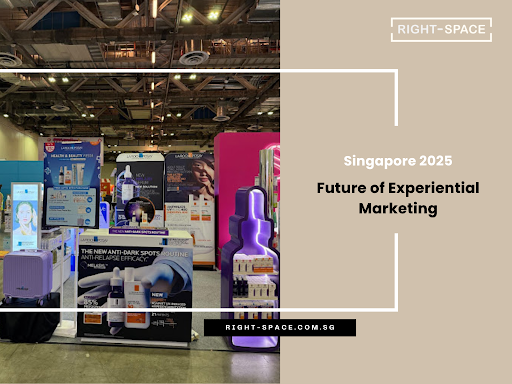
The future of experiential marketing in Singapore is being shaped by immersive technology, interactive tools and AI-powered personalization. This guide breaks down the innovations transforming brand experiences in 2025 and explains how marketers can design events that are memorable, interactive and backed by measurable ROI.
1. Why Experiential Marketing Is Entering a New Era in Singapore
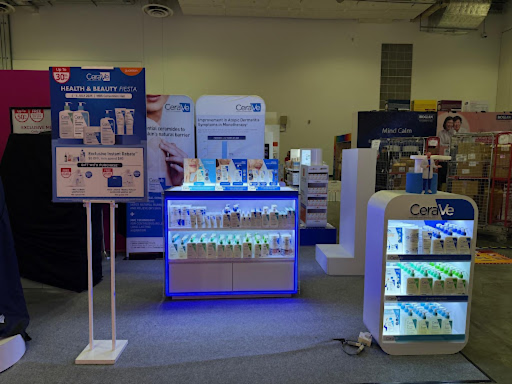
Experiential marketing in Singapore has evolved into a core brand-building strategy. Instead of relying on passive advertising, brands now use interactive environments and multi-sensory event design to earn attention and build emotional connection.
Singapore’s innovation-driven landscape accelerates this shift, with several factors shaping how events are planned today.
1.1 Digital Fatigue and the Demand for Authenticity
Audiences in 2025 are overwhelmed by digital noise. Interactive real-world experiences offer a refreshing alternative, providing tactile engagement and deeper memory formation.
1.2 Singapore’s Innovation Ecosystem
The country’s reputation as a technology hub accelerates the adoption of next-gen experiential tools—VR demos, holographic displays, interactive LEDs and AI activations.
Brands planning tech-enabled showcases often reference similar builds in the project portfolio, which highlight real case examples and spatial design solutions.
1.3 Accountability and ROI Measurement
As fabrication and tech costs rise, marketers need stronger KPI structures. Experiential marketing is now expected to deliver trackable engagement, not just visual appeal.
2. Immersive Technologies Defining Singapore’s Experiential Landscape
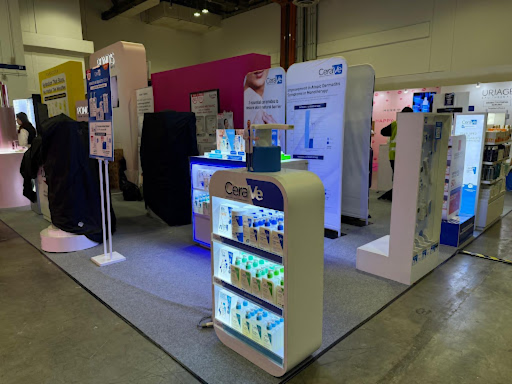
Immersive technologies—AR, VR, projection mapping, interactive screens—now form the foundation of Singapore’s experiential events.
2.1 AR and VR as Core Narrative Tools
Brands use augmented and virtual reality to create:
- 3D product demos
- Virtual tours
- Gamified missions
- Interactive overlays
These formats make complex ideas easier to understand and create memorable experiences that enhance social sharing potential.
To understand how spatial design supports immersive tech, see examples from the exhibition booth design service page.
2.2 Projection Mapping and Digital Worlds
Projection mapping transforms static surfaces into cinematic canvases. Singapore events increasingly use responsive projections that react to movement, sound or touch.
2.3 Gesture-Based and Motion-Responsive Experiences
Touchless interaction tools—gesture controls, motion sensors and body tracking—enhance interactivity while maintaining hygiene and accessibility standards.
3. AI-Powered Experiences and Personalization
AI is rapidly shaping the future of experiential marketing in Singapore. Interactive AI tools now serve as crowd magnets and personalization engines.
3.1 AI Photo Booths and Generative Visuals
AI photo booths generate instant shareable content with stylised portraits, digital stickers or themed filters. They consistently drive high user-generated content (UGC) performance.
3.2 Robotics and Creative Automation
Robot-powered caricature stations and automated art installations have become popular centrepieces, blending engineering with creativity.
3.3 AI Assistants Guiding Visitor Journeys
AI-driven event tools personalise the attendee experience by:
- Suggesting curated event routes
- Offering instant answers to queries
- Recommending content based on preferences
- Facilitating intelligent networking matches
These systems make large events feel more intuitive and reduce operational friction.
To learn how live experiences integrate with tech-led storytelling, visit the live event production page.
4. Gamification and Engagement Tools Driving Participation
Gamification has become one of the most effective engagement strategies in Singapore events.
4.1 High-Performance Gamified Formats
Brands now use:
- App-based scavenger hunts
- QR challenges with rewards
- Timed games
- Trivia contests
- Leaderboard competitions
These formats extend dwell time and motivate exploration.
4.2 Social Walls and Real-Time Sharing
UGC-friendly activities, AI booths and digital leaderboards amplify reach on TikTok and Instagram. Social walls encourage audiences to post event content using branded hashtags.
If you want inspiration for interactive spaces that increase footfall and participation, refer to this article on creative booth design ideas.
5. Multi-Sensory Environments and Creative Stations
Experiential campaigns now rely on multi-sensory design to deepen emotional impact.
5.1 Sound, Light and Scent as Experience Architecture
Brands use ambient lighting, soundscapes, fragrance cues and tactile materials to shape how visitors feel inside the event environment.
5.2 High-Engagement Hands-On Stations
Singapore audiences respond strongly to:
- DIY craft corners
- Mixology or tasting booths
- Tech demo areas
- Small-group workshops
These stations build affinity by encouraging participation and creativity.
6. Hybrid Formats and Sustainable Production
Hybrid event formats continue to flourish in Singapore as organisers pursue cost efficiency, accessibility and sustainability.
6.1 Benefits of Hybrid Events
Hybrid formats enable:
- Wider geographic reach
- Real-time audience interaction
- High accessibility for remote participants
- Lower per-attendee cost
- Reduced travel emissions
6.2 Sustainability Requirements Increasing Across MICE Sector
Guided by the Singapore Green Plan 2030 and the MICE Sustainability Roadmap, brands now adopt:
- Reusable modular structures
- Digital invitations
- Paperless check-ins
- Energy-efficient lighting
- Recyclable fabrication materials
For physical installations requiring sustainable materials or eco-conscious fabrication, brands often consult commercial interior design insights for durable and efficient spatial solutions.
7. Measuring Success: Data, Analytics and ROI
As experiential budgets grow, measurement has become essential. Stakeholders now require quantifiable impact across multiple levels.
7.1 Define Clear Objectives
Examples include:
- Lead generation
- Dwell time
- Demo participation
- Social engagement
- Brand recall lift
7.2 Track Engagement and Digital Metrics
Brands in Singapore commonly track:
- Footfall
- Heatmaps
- QR scans
- UGC posts
- Hashtag reach
- Conversion rates
- Opt-in rates
7.3 Use Technology for Data Capture
Tools include:
- RFID systems
- CRM-integrated event apps
- Heat-map analytics
- Social listening platforms
7.4 Calculate ROI Beyond Immediate Revenue
Strong ROI frameworks consider long-term value, including:
- Brand affinity
- Market penetration
- Partnership leads
- Community growth
8. Case Studies: What Singapore Events Reveal About the Future
8.1 SuperAI 2025
SuperAI gathered thousands of attendees at Marina Bay Sands and featured immersive tech showcases, robotics demos and a multi-day hackathon. It highlights Singapore’s appetite for large-scale, innovation-led experiential events.
8.2 GovWare Singapore 2025
GovWare introduced high-engagement AI installations such as interactive sticker booths and robotic art stations — demonstrating how AI can elevate corporate events and attract social amplification.
For a deeper look at activation strategy and outcomes, marketers often reference the Brand Activation Singapore insights page for patterns behind successful campaigns: https://right-space.com.sg/insights/
Conclusion
Experiential marketing in Singapore is entering a new chapter shaped by immersive technology, AI-driven personalisation, multi-sensory design and sustainability. Brands that pair creative ambition with data-backed decision-making will dominate in 2025. Experiences are no longer isolated moments; they are strategic touchpoints that influence loyalty, brand equity and long-term engagement.
If your team is planning an experiential campaign, pop-up event or immersive activation, you can contact our team to explore strategy, creative development or full end-to-end production support.
FAQs: Future of Experiential Marketing Singapore
1. Why is experiential marketing important for Singapore brands?
It immerses consumers in interactive environments, driving stronger emotional connection and brand recall.
2. What technologies are shaping 2025 events?
AR/VR demos, projection mapping, holographic displays, AI photo booths, gesture-based interaction and RFID tools.
3. How do I keep attendees engaged?
Use gamification, QR missions, social walls, creative stations and real-time polling.
4. Why are hybrid events still relevant?
They increase accessibility, reduce environmental impact and allow scalable attendance.
5. How do brands measure ROI?
By tracking engagement metrics, lead capture, sentiment shifts and conversion data using CRM and event analytics.